More blogs
Three Games, One Golden Thread: How BBC Sport's Virtual Olympic Coverage Evolved from Tokyo to Paris
I first started working on a virtual set for the BBC's Olympics coverage in early 2019. The games were in Tokyo, the plan was to broadcast from inside the International Broadcast Centre, and once we'd been succeseful in the competitive pitching process, we had 11 months to design something worthy of the world's biggest sporting event.
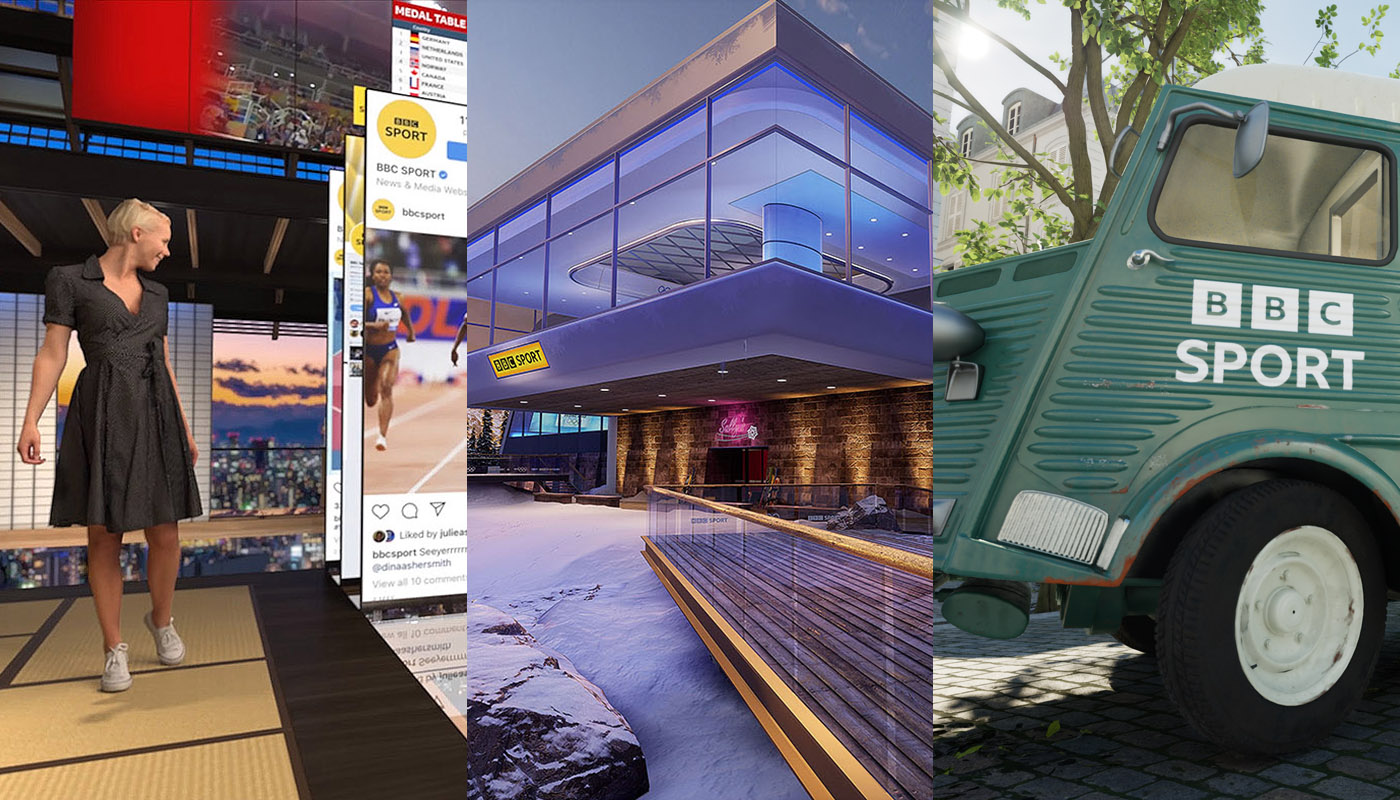

As with so much of my BBC Sport work, I developed the designs in close collaboration with Toby Kalitowski - a long-standing creative partnership that has shaped some of the most significant projects in Lightwell's portfolio. What followed across Tokyo, Beijing, and Paris turned out to be one of the most creatively and technically demanding journeys of my career. But looking back, it is also a story about something more specific: how Lightwell progressively took ownership of the entire virtual production, creative pipeline, and what became possible when we did.
Tokyo: The Pavilion and the Lesson
For Tokyo, we designed a timber pavilion notionally perched on top of a Tokyo skyscraper - open-sided, multi-level, with Mount Fuji visible on the horizon and a koi pond on the lower deck whose fish the crew subsequently named. The level of detail we put into that pavilion was uncompromising. Every timber joint was modelled. Metal fitch plate fixings were embedded into the timber structure. We didn't cut corners on a single construction detail, because we believed - and still believe - that it is exactly that kind of rigour at the micro scale that makes a virtual environment feel convincing at the macro scale. That 3D model was then imported into Unreal Engine by our integration partners, Moov, who also created the Tokyo cityscape exterior based on our design visuals.
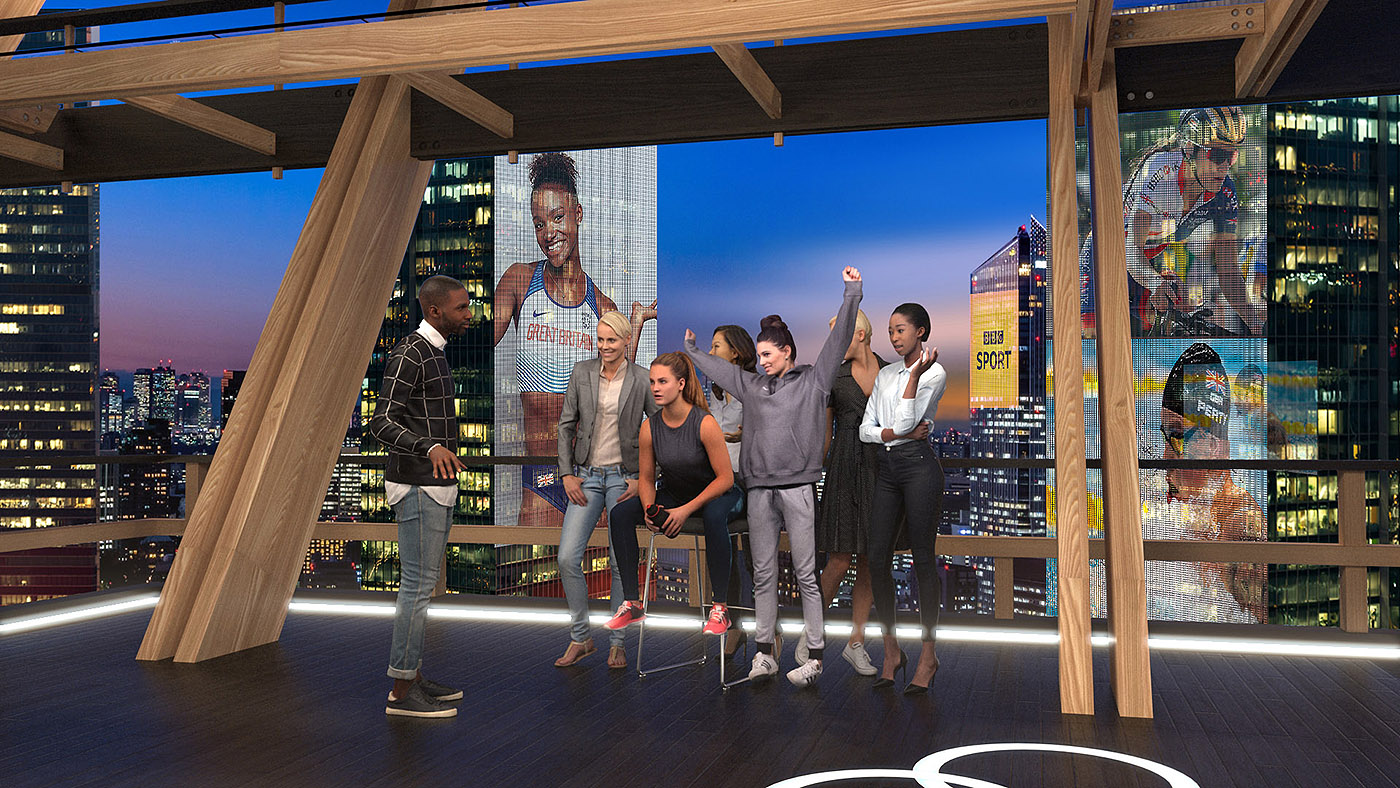
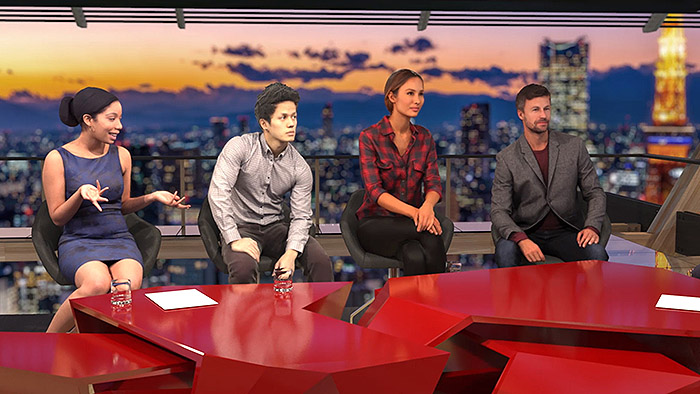
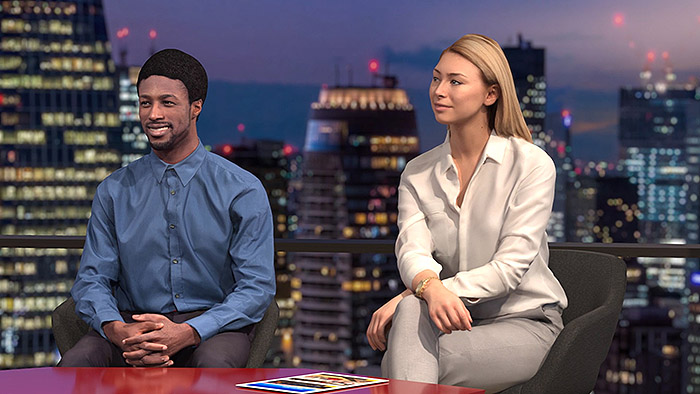
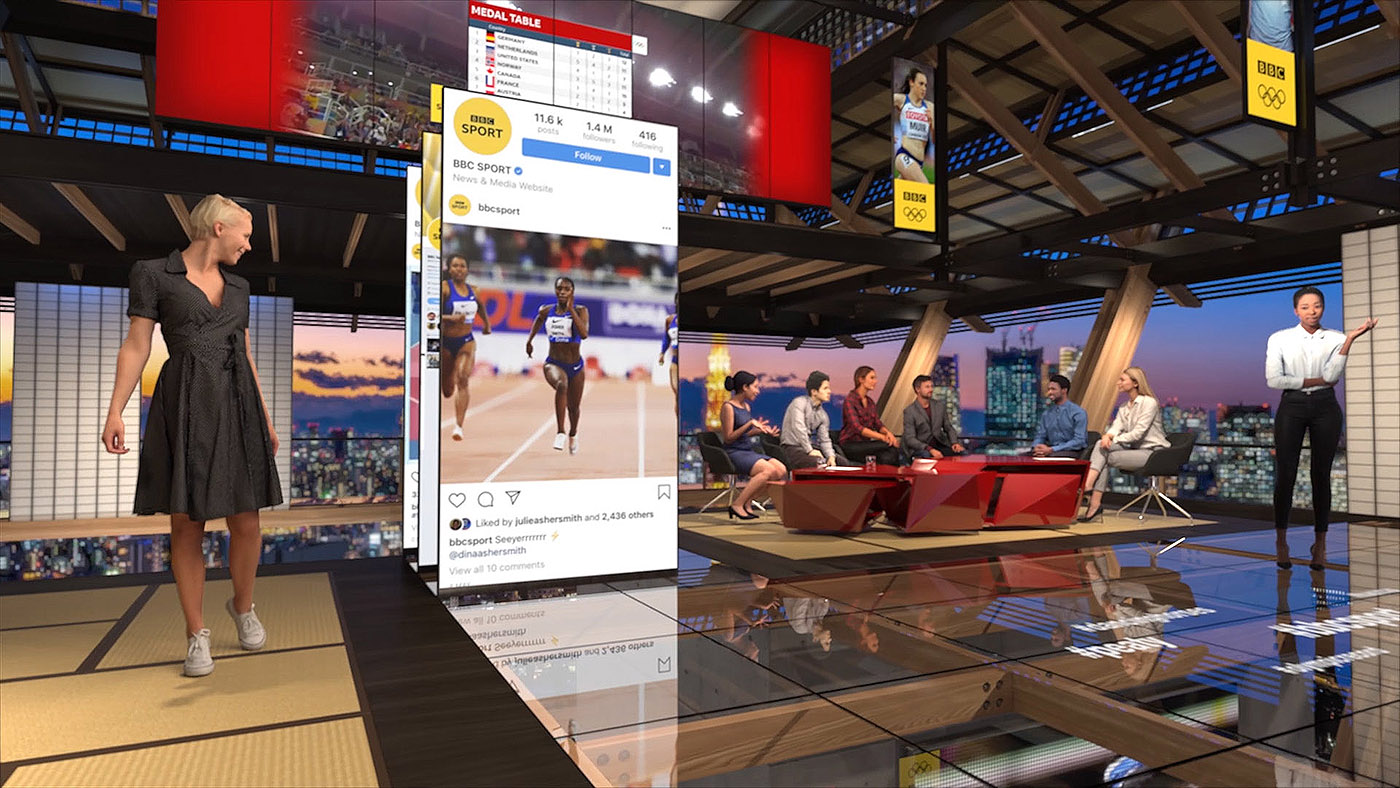
When the pandemic delayed the games by a year and ruled out travel entirely, the whole production moved from Tokyo to Dock10 at MediaCity in Salford. That enforced change of plan turned out to be an opportunity. The original exterior environment had used a photographic panorama with some 3D architecture introduced into the mid-ground to establish depth and parallax. With the additional time available, Moov were able to develop that mid-ground significantly - from isolated 3D buildings placed in front of a flat photograph, into a full 360° ring of three-dimensional cityscape. Performance constraints at the time meant the extent and detail of that 3D ring were limited. But it worked. And more importantly, it showed us what was possible.
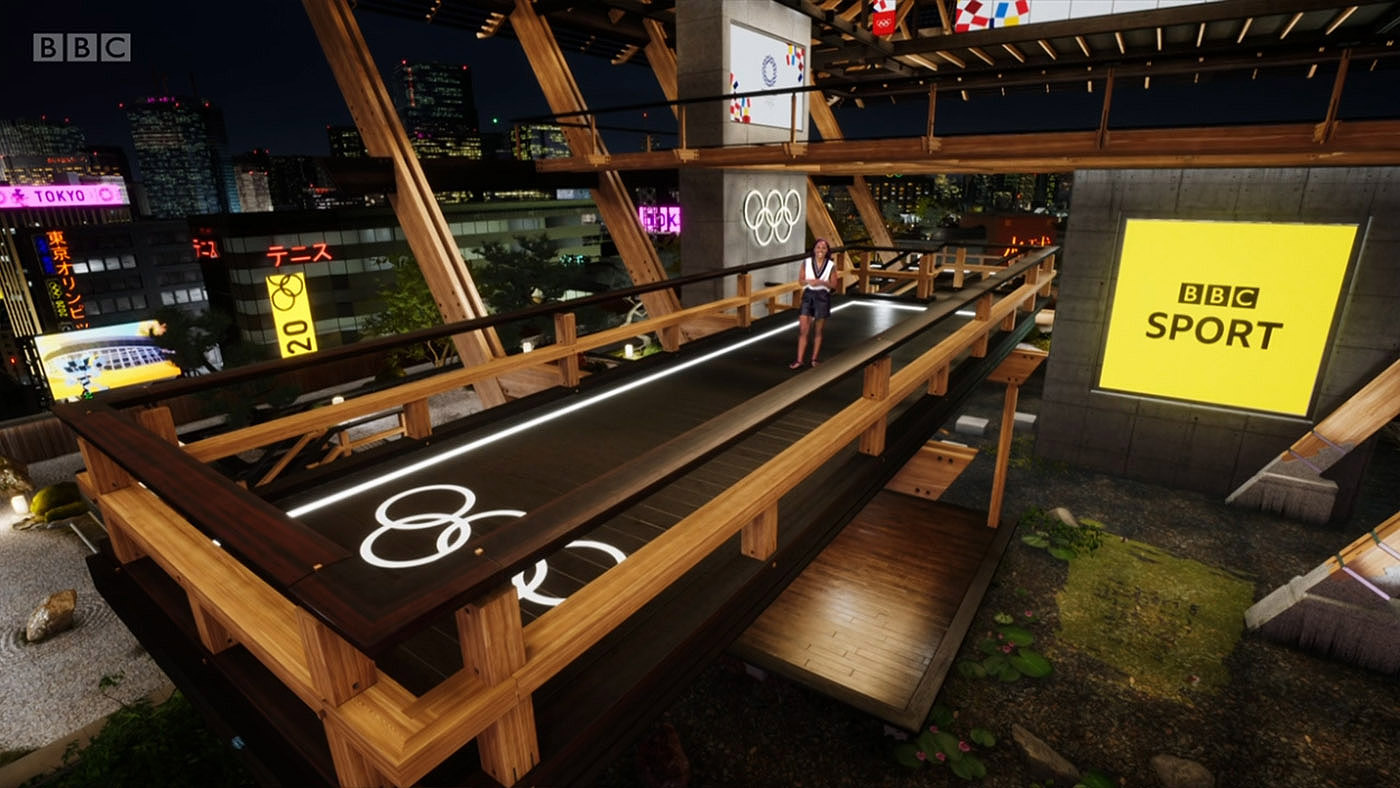
It also showed us something else. Lighting has always been central to what Lightwell does - it is not incidental to our designs, it is the medium through which they come alive. At Tokyo, that critical element was in other hands. The lesson I took from the experience was clear: on future productions, Lightwell needed to own the entire Unreal Engine pipeline, all the way through to the on-air version of the set. That meant developing a capability we didn't yet fully have.
The measure of success at Tokyo came from the audience. So many viewers genuinely believed the broadcast was coming from Japan that presenters found themselves confirming on social media that it wasn't. Sir Chris Hoy was among them. We'd reached a point where the conversation had shifted from "it looks a bit fake" to "you're not actually in Tokyo, are you?" That was significant. The production won the RTS Award for Best Sports Programme.
Read the full case study: BBC Tokyo Olympics 2020 Virtual Set
Pres 2: Taking Ownership of the Pipeline
Between Tokyo and Beijing came a project that is less visible than the Olympics but was, in many respects, the most important step in Lightwell's development: the BBC Sport Pres 2 studio at MediaCity in Salford, launched in April 2021.
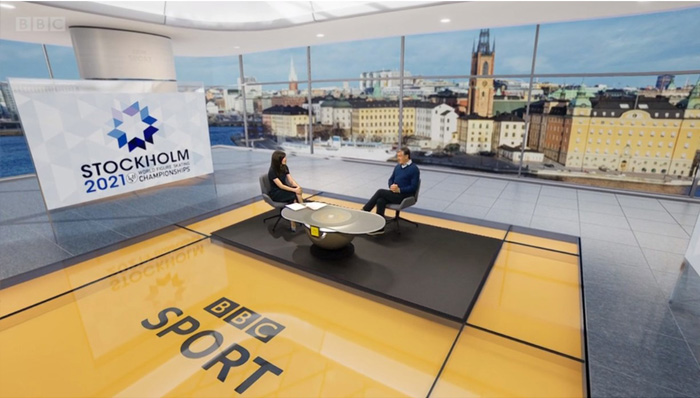
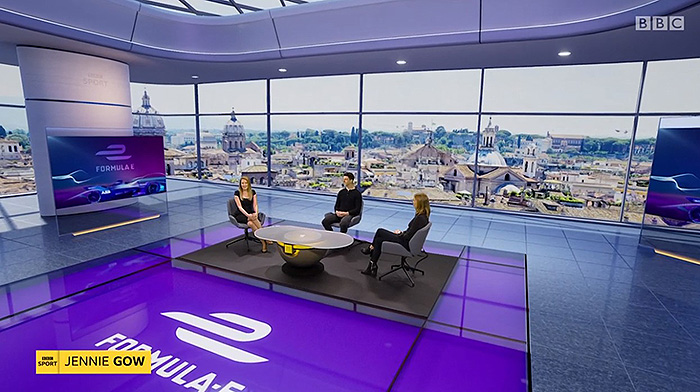
Pres 2 was more than a stepping stone — it was a critical stage. The brief was a versatile, multi-space virtual studio that could serve BBC Sport's full year-round output: Match of the Day, the Euros, Wimbledon, and eventually the Olympics. What made it transformative for Lightwell was what happened behind the scenes. We made a substantial effort to develop our capability across the entire Unreal Engine pipeline — from initial design and 3D build, through lighting, through to the on-air delivered set. For the first time, Lightwell was in control of every element of the virtual environment, including the lighting that had always been our primary concern.
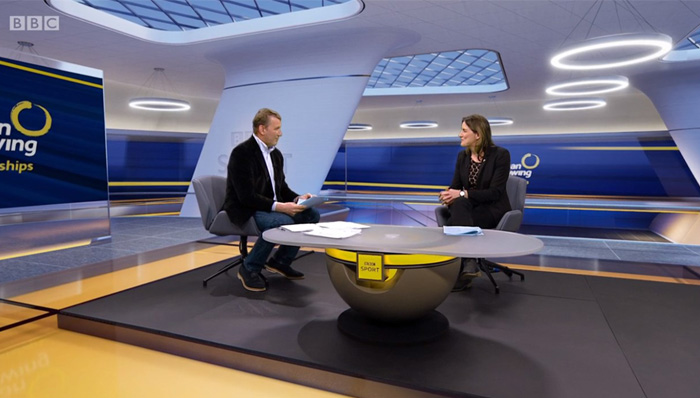
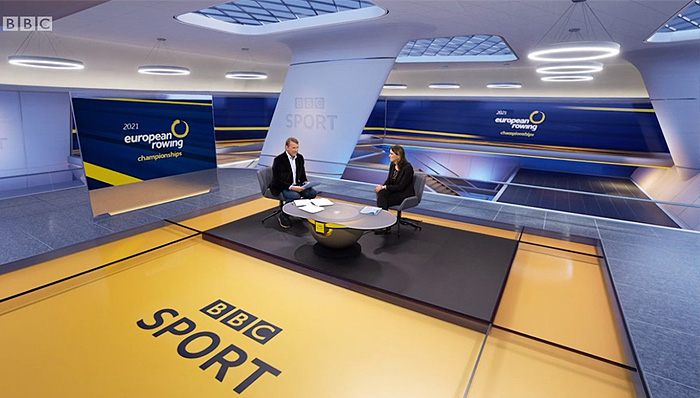
The result was a studio with five distinct presenting positions, running on Vizrt's Viz Engine 4 with its integrated Unreal Engine 4 render pipeline, Fusion Keyer, and Mo-Sys StarTracker camera tracking. It went on to host some of the BBC's most watched sports programming. And it gave us the foundation on which everything that followed was built.
Read the full case study: BBC Sport Pres 2 Virtual Studio
Beijing: Letting Go of Photography
For the 2022 Winter Olympics, the brief was to transform the Pres 2 studio — just 84 square metres - into a mountain ski resort. The Pres 2 experience meant we arrived at Beijing with full ownership of the pipeline and a clear sense of what we wanted to do differently from Tokyo.
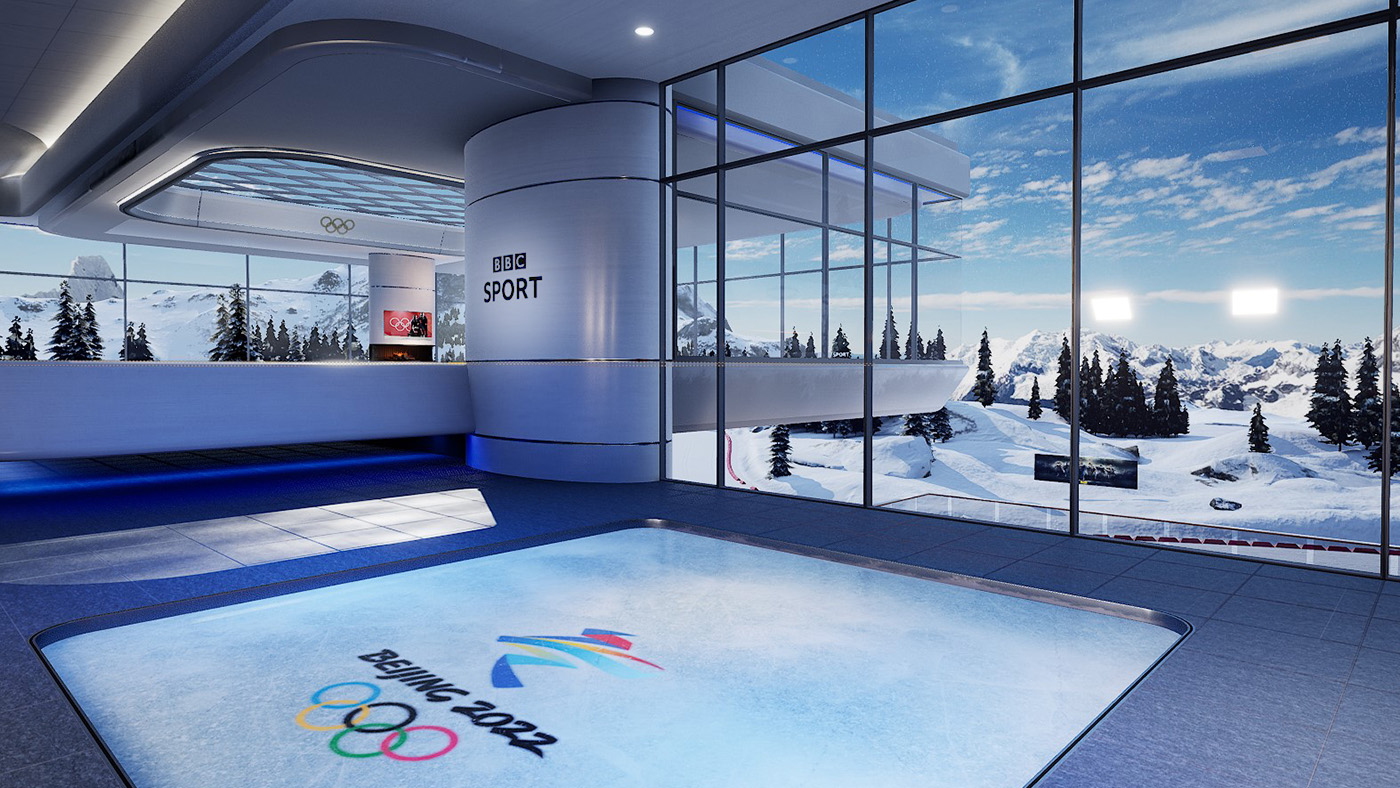
The most significant decision was to drop photographic panoramas for the exterior entirely - with the exception of the sky. Everything else: the landscape, the snow, the trees, the hills, the terrain - was fully three-dimensional, built and lit by Lightwell within Unreal Engine.
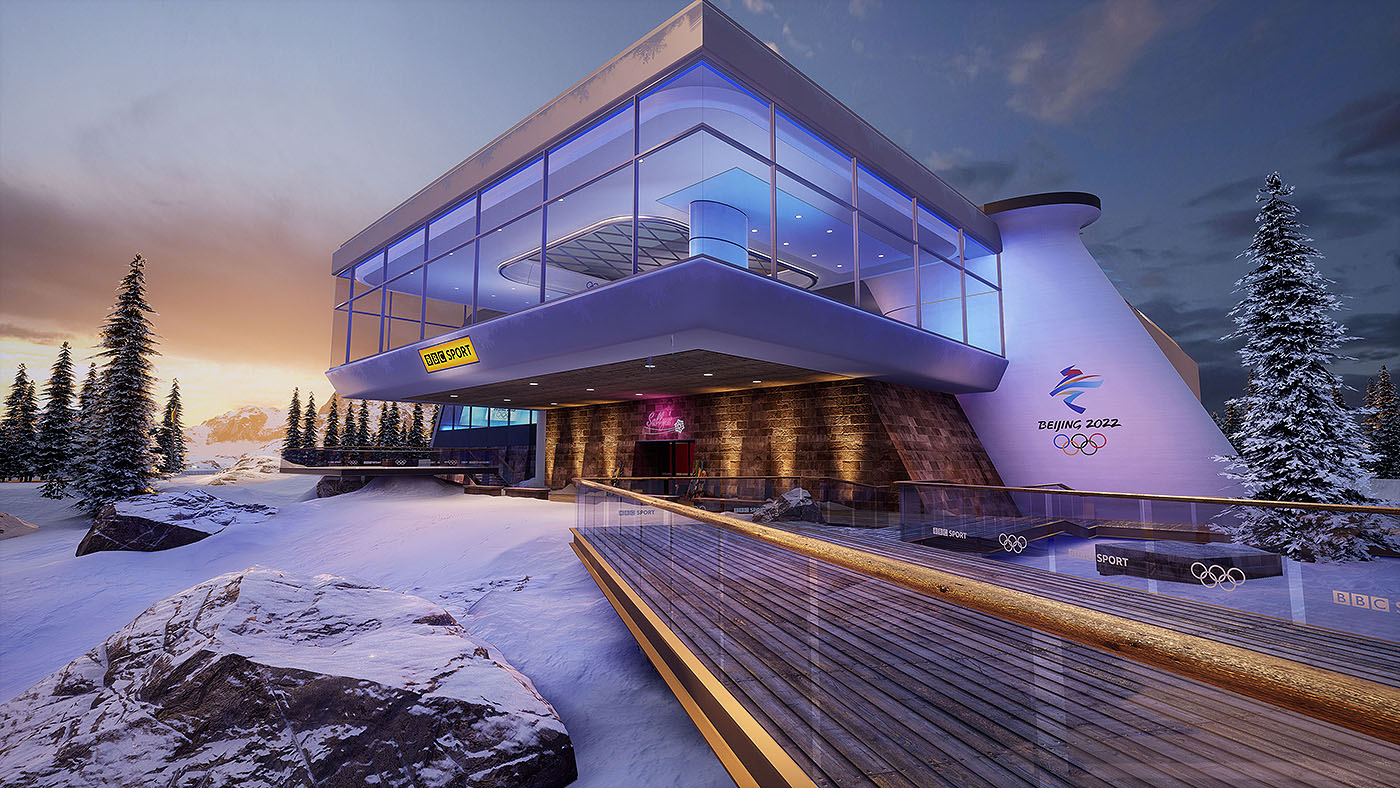
This wasn't simply a visual upgrade. With a photographic backdrop, lighting is fixed. You are compositing live presenters against a static image, and maintaining the illusion requires constant careful management. With a fully 3D landscape, lighting becomes something you can tune and refine continuously - adjusting how light falls across the snow, how it catches the tree line, how it changes across the course of a day. The three lighting configurations we built for Beijing - day, dusk, and night - worked far more convincingly than any photographic approach could have achieved, because the light was responding to a real three-dimensional space rather than a fixed, flat image.
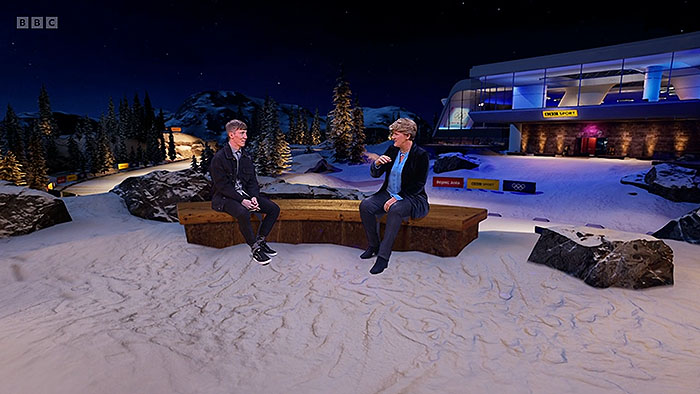
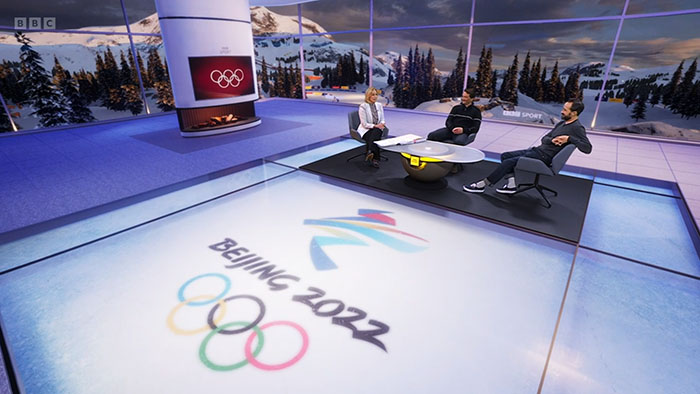

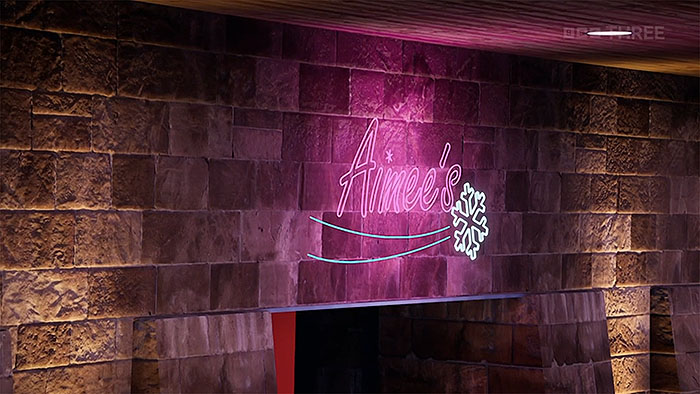
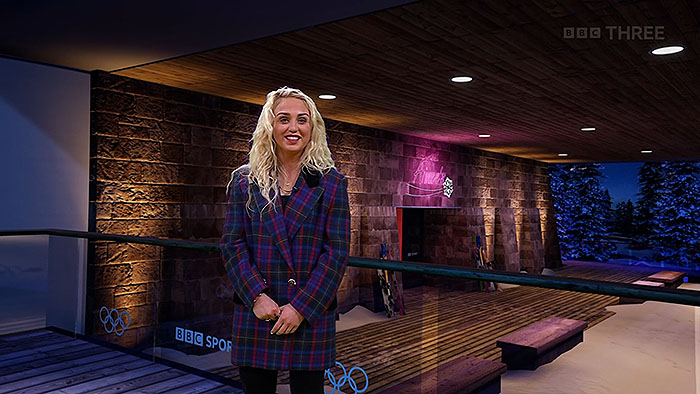
The other thing we gained was freedom of movement. With photography, the camera is fixed in relation to the backdrop - move the camera and the illusion breaks. With a fully 3D landscape, we could navigate within it, tuning the position of individual trees and hills to suit specific shots, exploring the environment as a real space. By the closing ceremony we had eight distinct presenting positions in use, all within the same modest physical studio. A neon sign above the bar entrance could be switched to display the name of the current on-screen presenter. Our jib operator found angles in that ski resort that none of us had imagined when we built it - the moment when the crew starts treating the virtual world as a real space, and starts exploring it accordingly, is one of the things I love most about this work.
Read the full case study: BBC Beijing Winter Olympics 2022 Virtual Set
Paris: Where Real and Virtual Became One
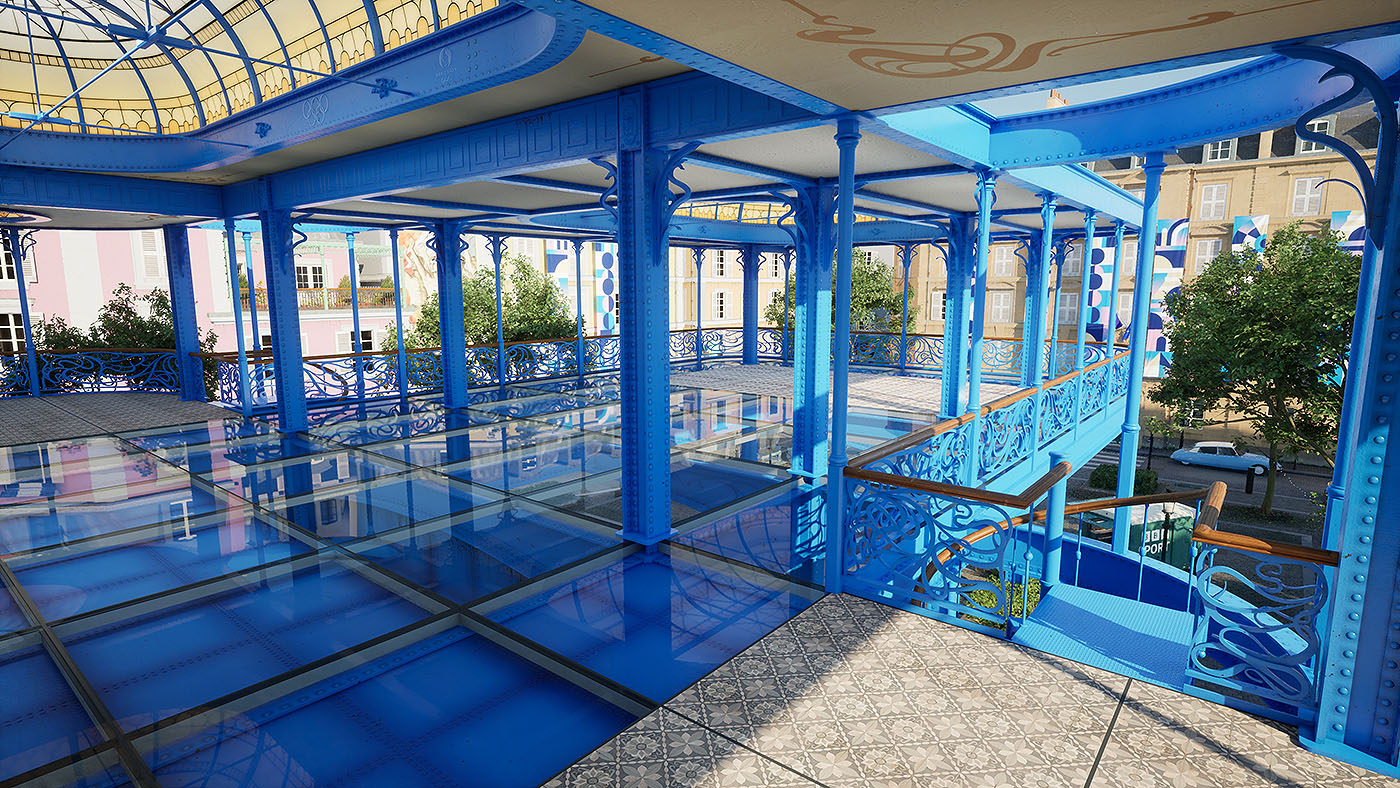
Paris was the most ambitious of the three, and it built directly on what Beijing had taught us. BBC Sport had a genuine physical location - a studio at the Trocadéro with a real view of the Eiffel Tower - and the task was to extend that real world seamlessly into a suite of virtual Parisian environments. The real and the virtual had to flow into each other so naturally that the boundary between them was imperceptible.
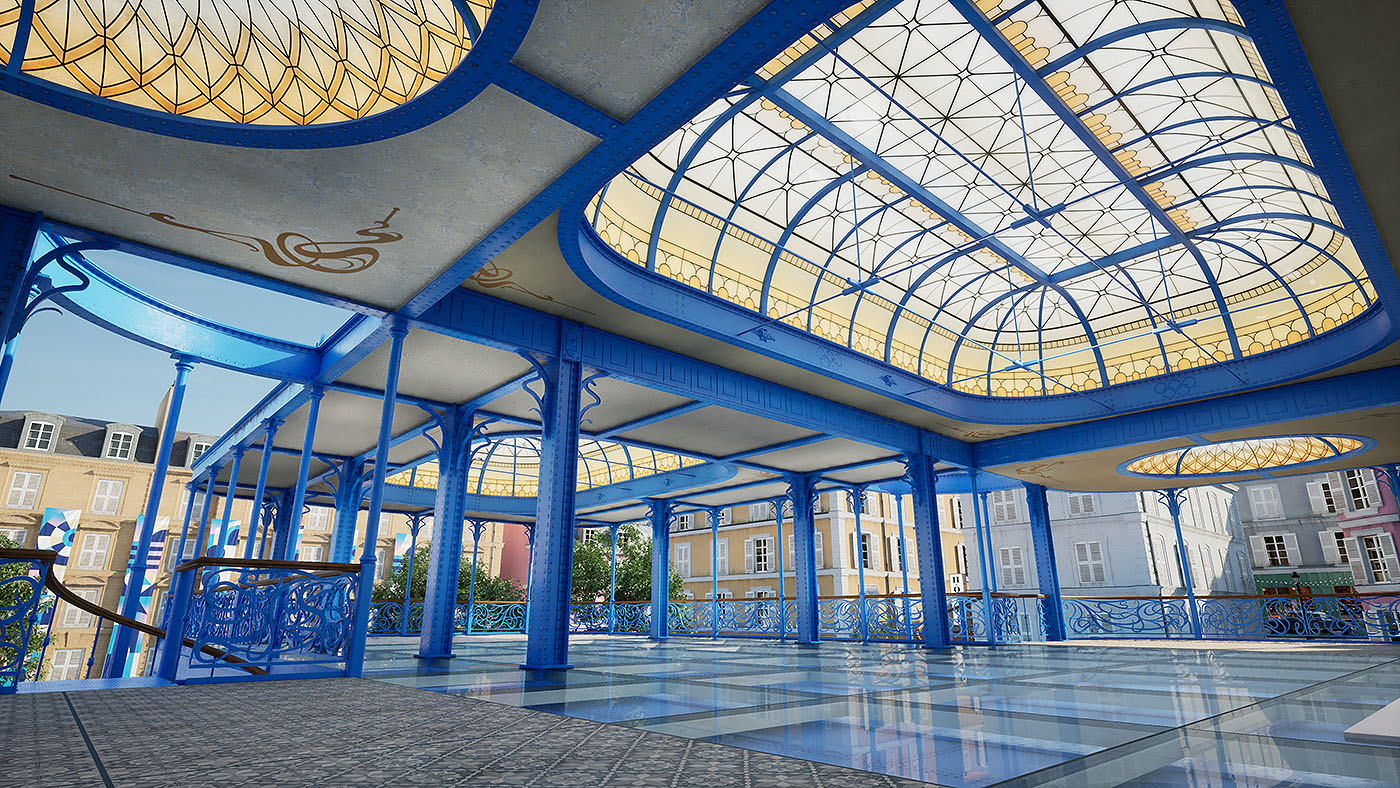
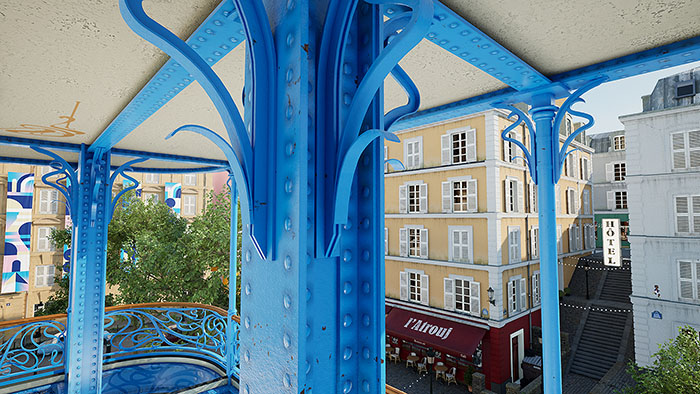
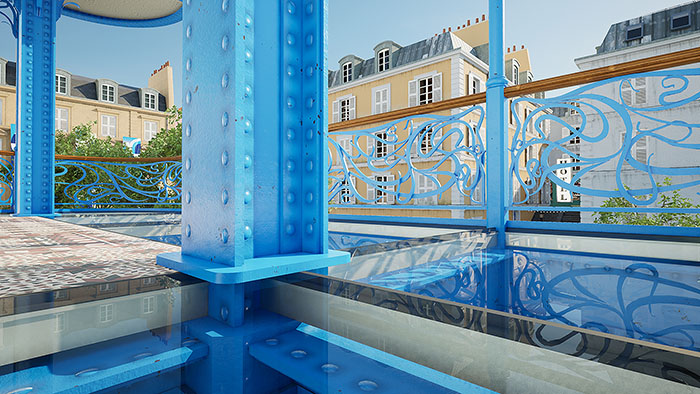
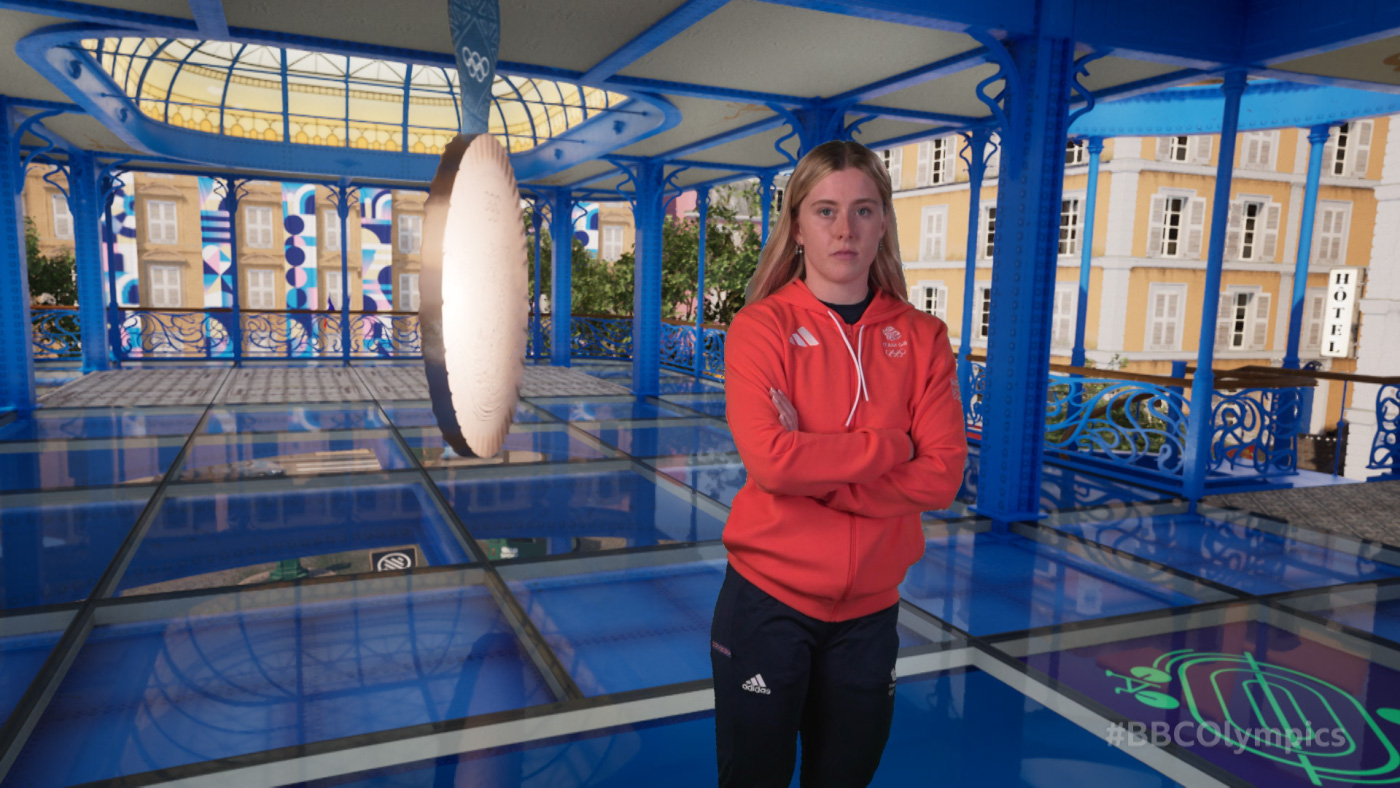
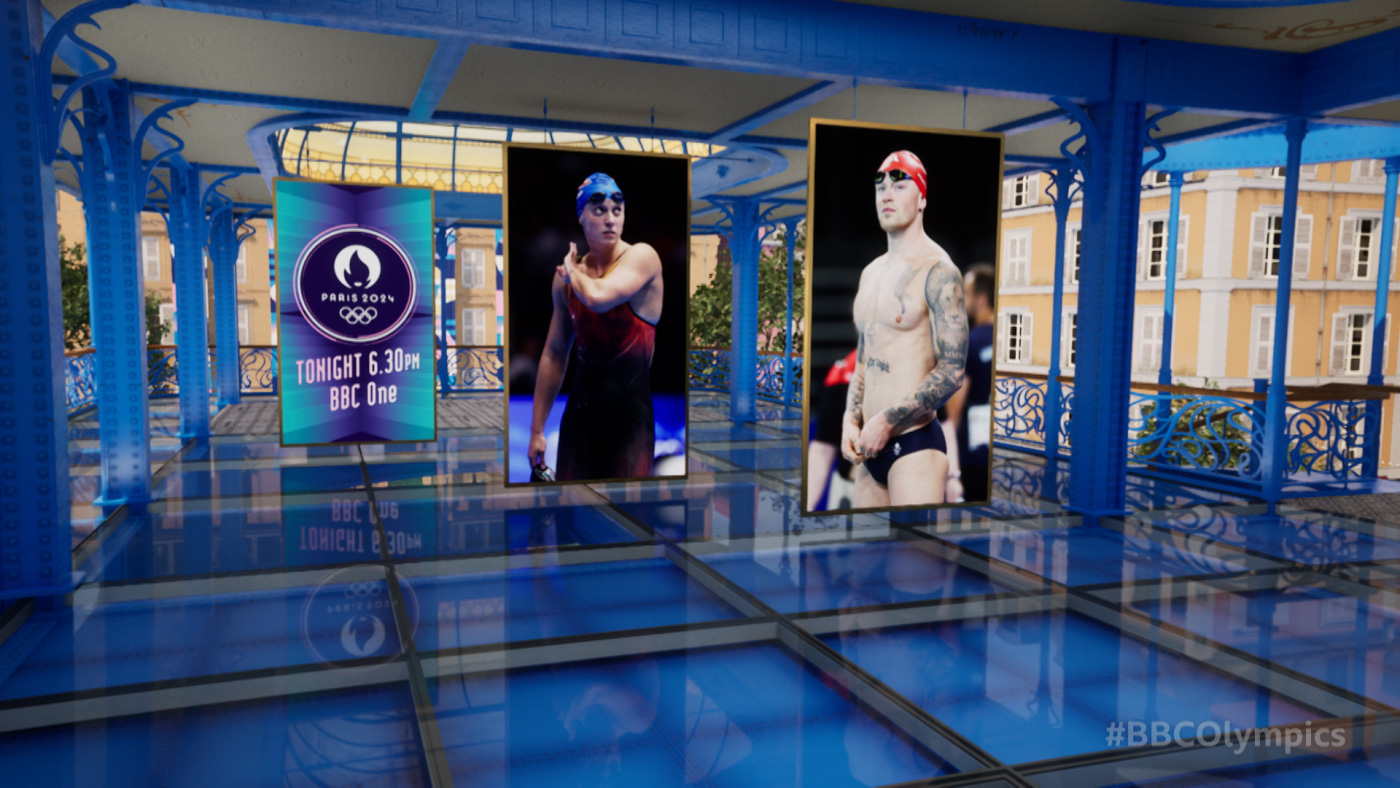
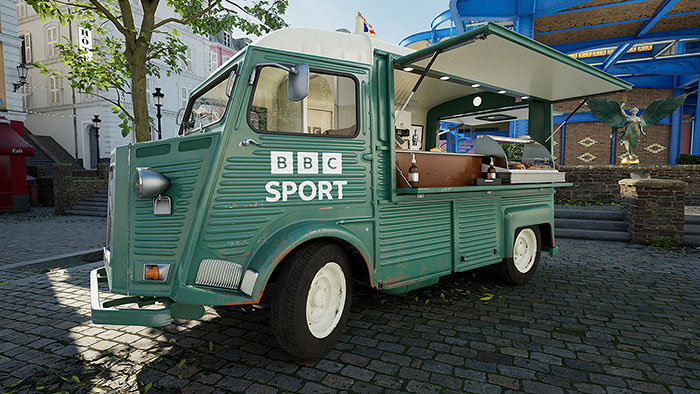
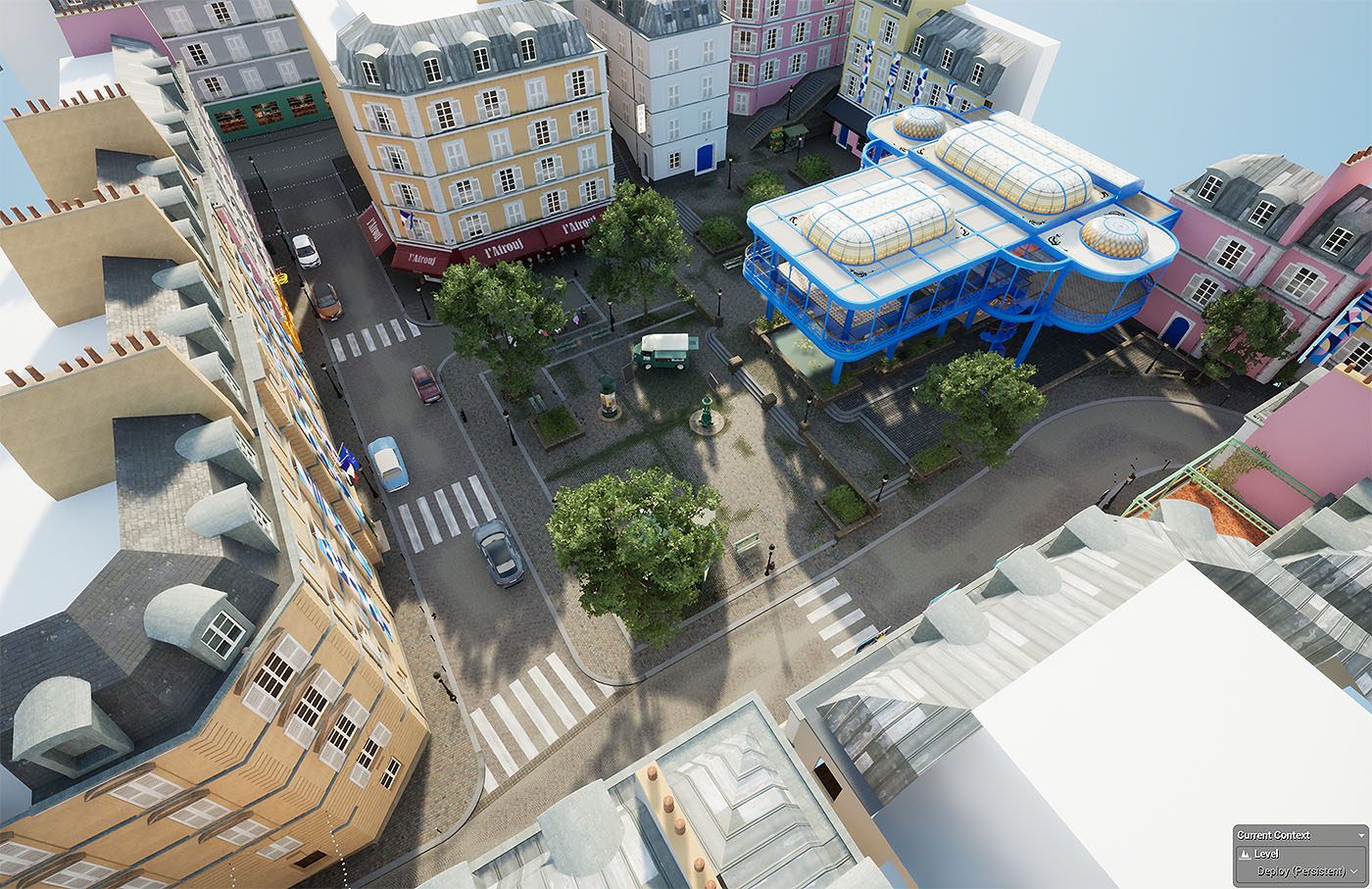
We designed a cast iron pavilion inspired by Belle Époque architecture, aged and weathered with chipped metalwork and rust details - surface quality that only feels convincing when built in three dimensions, responding to real-time light. Beyond the pavilion, the virtual environment continued into a fully realised Parisian square - cobbled paving, trees, apartments - within which a classic Citroën HY food truck in heritage BBC Sport livery provided a relaxed backdrop for lighter moments. On the morning of the first broadcast, the crew arrived with fresh croissants and the morning papers to dress the coffee truck scene. Nobody asked them to. They'd simply bought into the world we'd created and wanted to make it real. That, for me, is the best possible measure of a virtual set.
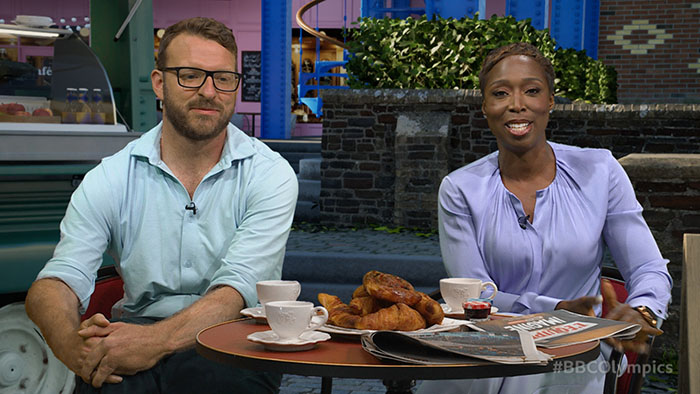
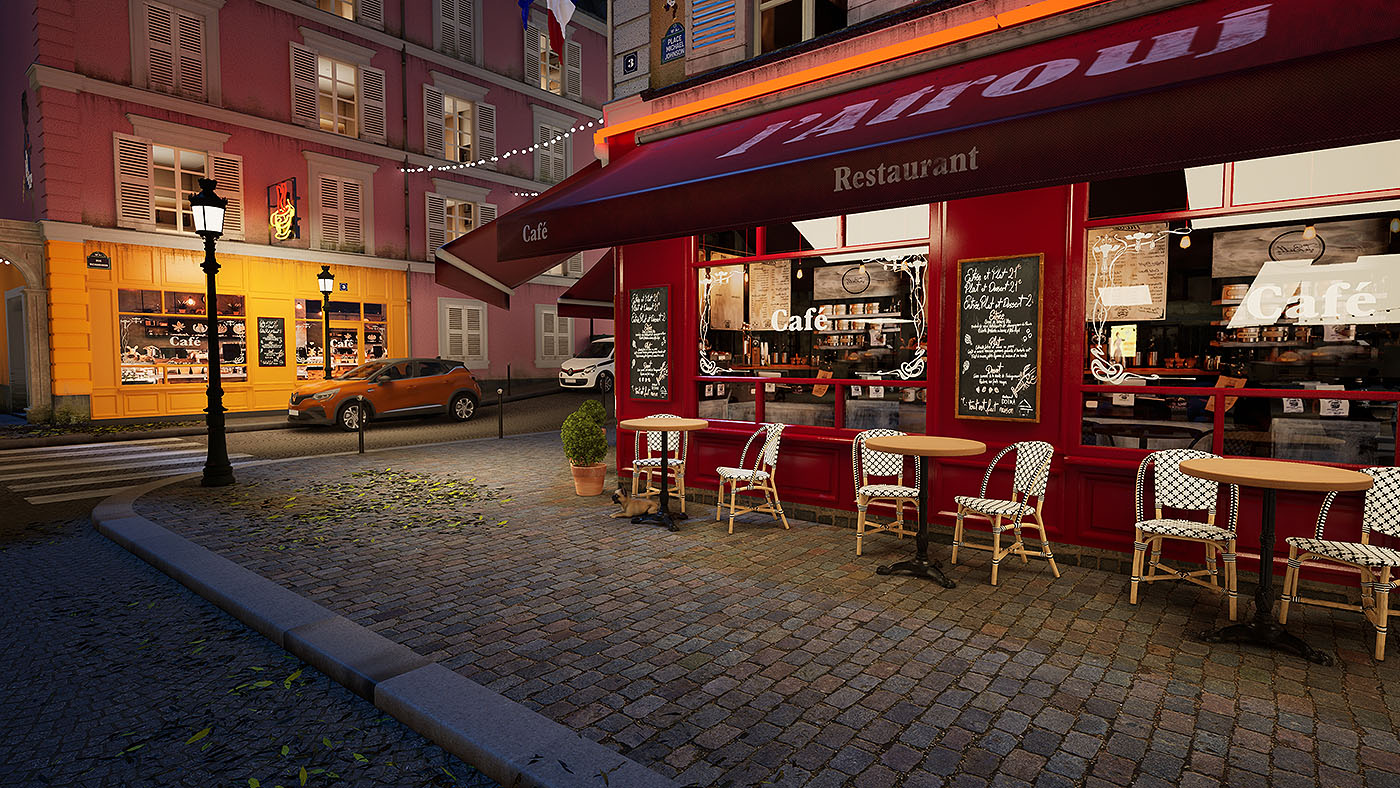
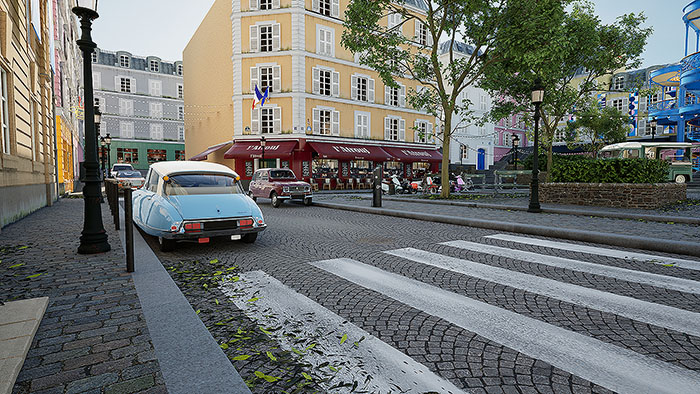
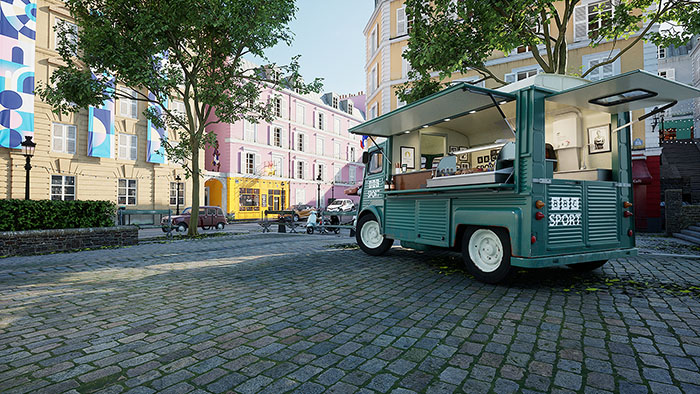
The production operated across a split site - gallery direction from Salford, physical studio and cameras in Paris. The key breakthrough was that the virtual world no longer needed to be kept at a careful distance from the physical one. The real Trocadéro studio, with its genuine view of the Eiffel Tower, flowed directly and seamlessly into the virtual Parisian square beyond. Everything was part of a successful whole. The BBC Sport Paris Olympics coverage won the BAFTA Award for Best Sports Coverage in 2025 and the IOC Golden Rings Award for Best Innovations in 2024.
Read the full case study: BBC Paris Olympics 2024 Virtual Set
What This Journey Has Taught Us - and Where It's Taking Us
Each of these productions started from the same fundamental question: how do you create a sense of place that feels genuinely real, from a greenscreen studio in the North of England? - note, the Paris greenscreen was located within the Trocadero studio, but the render engines and production were based out of Media City, Salford. The answer has been different every time, but the underlying progression has been consistent. We have moved from photographs with 3D elements placed in front of them, to isolated 3D buildings within photographic environments, to fully realised three-dimensional worlds that can be lit, moved through, and explored in real time - with Lightwell in full control of every element of that process.
That progression didn't end at Paris. For the BBC's UEFA Women's Euros 2025 coverage, we placed a contemporary timber pavilion high above a virtual replica of Lake Lucerne - the full Swiss alpine landscape, the water, the mountains, the lights of distant buildings shimmering on the far shore at night, all built in three dimensions, all responsive to time of day. Presenters could step outside the pavilion onto a virtual exterior terrace and stand within that landscape. The golden hour could last as long as the production needed it to. The opening piece-to-camera used a sunset over the lake that set the tone for the entire tournament.
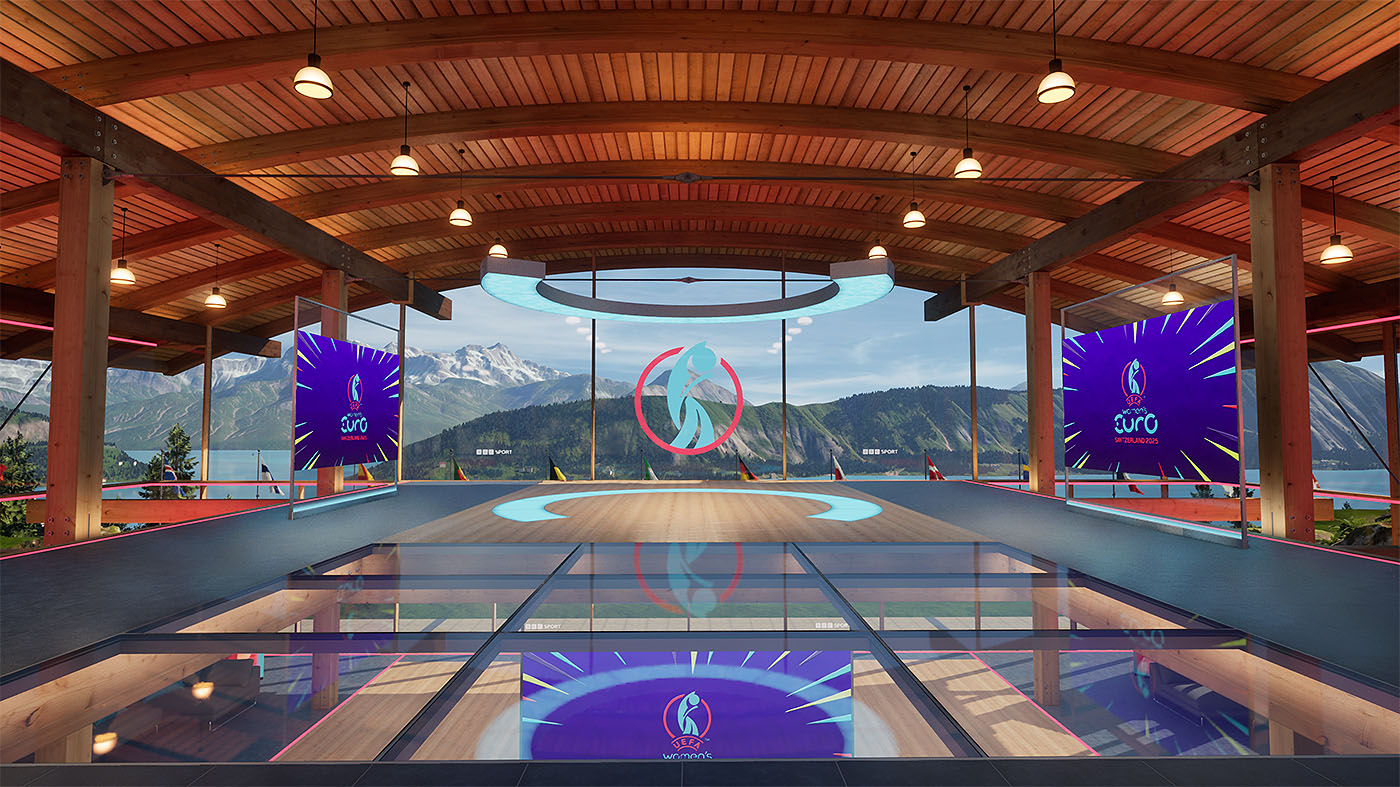
Everything we learned at Tokyo fed Pres 2. Everything we learned at Pres 2 fed Beijing. Everything we learned at Beijing fed Paris. And everything we learned at Paris is already shaping what we are designing now. This was the Golden Thread running through each of the projects in this sequence. That accumulated knowledge - about how real-time light behaves within three-dimensional space, about how crews inhabit virtual worlds, about what audiences believe and what breaks the spell - is one of Lightwell's most valuable assets. And we are nowhere near the end of what it will make possible.
The koi pond fish had names. The crew brought croissants. That's how you know you've done it right.

Lightwell designs virtual sets and virtual production environments for major broadcasters and global sporting events. Combining architectural design thinking with deep technical fluency, we create environments that are visually compelling, editorially flexible, and built to perform live. Clients include BBC, ITV, CNA, Bloomberg, Sky, and Discovery.
Read more