BBC Paris Olympics 2024: A Virtual Studio in the City of Light
The Brief
The brief was ambitious: a hybrid studio that combined a real physical space in Paris - with a genuine view of the Eiffel Tower from the Trocadéro - with virtual set extensions that could transport presenters across a range of Parisian locations.
The Design Concept
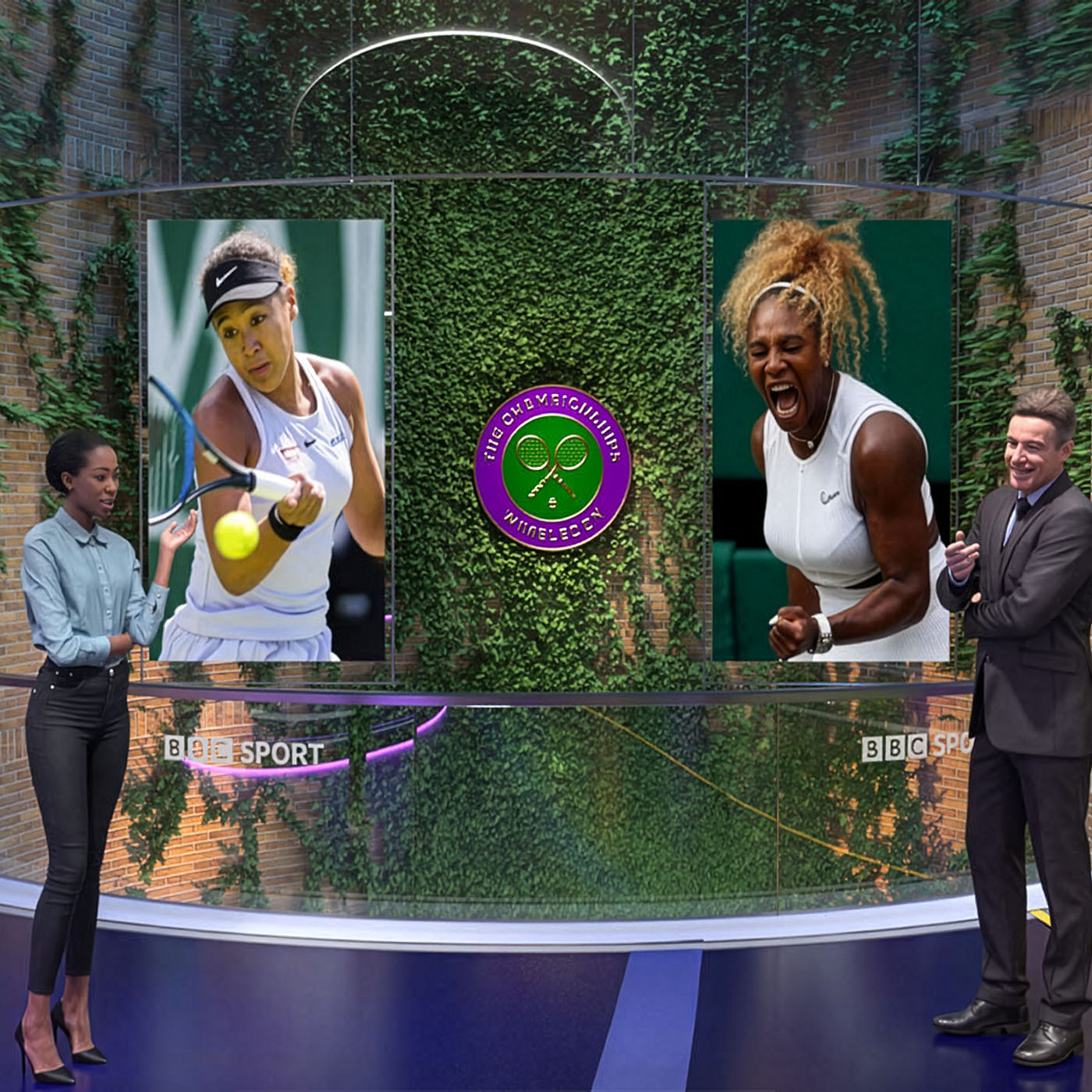
The design took its inspiration from Paris's Belle Époque architectural heritage. The main virtual environment is a cast iron pavilion — aged and weathered, with chipped metalwork and rust details that give it an authentic, lived-in quality. Modern glass floors are set over a combination of old tiles, iron decking, and open voids revealing the structure beneath - a layering of eras that mirrors Paris itself. The pavilion sits within a virtual urban square evoking the spirit of Montmartre.
A second, distinct presentation space - the Parisian square - gave directors an entirely different editorial register. At its centre: a classic Citroën HY food truck, finished in a heritage BBC Sport paint livery, providing a relaxed backdrop for lighter interviews and guest discussions. It was a detail that gave the coverage warmth and playfulness alongside the more formal analysis spaces.
A Hybrid of Real and Virtual
This was a genuinely hybrid production. The physical studio in the Trocadéro offered what Sally Richardson, BBC Sport's lead director, described as "the best view in Paris" - a live backdrop of the Eiffel Tower visible behind presenters. The greenscreen then extended that real-world view into a suite of virtual Parisian environments, seamlessly merging what was genuinely there with what Lightwell had built in Unreal Engine. Team GB athletes were filmed prior to the Games and converted into 360 avatars for use within the studio space throughout the tournament.
Technical Delivery
The set was built in Unreal Engine 5.2, using Lumen and Nanite for photorealistic real-time rendering, with additional texturing created in Adobe Substance Designer and Painter. Virtual integration was handled by Moov, who also operated the system live during broadcasts. BBC Sport's Vizrt platform, controlled remotely from MediaCity in Salford under the stewardship of BBC Sport senior software engineer Andy Bowker, powered the graphics and keying systems throughout.
The production operated across a split-site workflow - gallery direction and editing from Salford, with the physical studio and camera crew in Paris. Richardson noted the challenge this presented: "From a director's point of view, not being able to go out onto the studio floor and get an understanding of how movement works - that is really tricky." Despite this, the crew found creative possibilities within the virtual world that exceeded expectations. "Our jib operator Carl Wilson - he finds things in the VR world which I don't think any of us ever really thought would be possible," said Richardson.
The Result
A studio that demonstrated how a hybrid real-virtual approach, when thoughtfully designed, can add genuine editorial richness to live event coverage - not just visual spectacle. The BBC's Paris 2024 Olympics coverage went on to win the BAFTA Award for Best Sports Coverage in May 2025, and the IOC Golden Rings Award for Best Innovations (AI/Technology) in November 2024.
The NewscastStudio review of the studio is available here.
Client
BBC Sport
Design
Toby Kalitowski
Jim Mann, Lightwell
Studio Integration
Moov
Realtime Engine
Unreal Engine 5.2
Powered by
Viz 5
Awards
BAFTA - Best Sports Coverage
Olympic Golden Rings Awards - GOLD - Best Innovations (AI/Technology)