BBC Tokyo Olympics 2020: Bringing Tokyo to Salford
The Brief and the Beginning
BBC Sport briefed designers for a next-level sports broadcasting presentation space that would take viewers on a new journey of Olympics presentation, offering both creative and editorial freedom. Lightwell and Toby Kalitowski of BK Design Projects were selected for the virtual design, with Moov handling integration. The pitch response left a strong impression. As John Murphy, Creative Director of Motion for BBC Sport, put it: the design "kind of blew all our minds really. It was fantastic."
The original plan was to broadcast from a greenscreen studio inside the International Broadcast Centre in Tokyo itself. Then the pandemic intervened - first delaying the games by a year, then ruling out travel entirely. The production was redirected to Dock10 at MediaCity in Salford. The entire studio footprint, including the lighting grid, was transferred from the IBC specification to the Dock10 facility. As Kalitowski noted: "Really, it was quite surprising how we were able to make that switch."
The Design Concept
The brief asked for an iconic location that reflected both the ultra-modern and traditional faces of the host city. The answer was a timber-structured pavilion notionally situated on top of a Tokyo skyscraper - open-sided, multi-level, and architecturally grounded in both modern and traditional Japanese design. Materials and construction details were researched and applied with precision throughout; not even the finest construction details were omitted from the model. Mount Fuji is visible on the horizon from the main presenting area.
The studio contained three distinct levels as seen by the viewer - yet all were physically contained within a single studio space in Salford. Managing the spatial logic of that illusion - ensuring presenters, crew, and cameras were always in the right place within an environment that only fully existed on screen - was one of the central production challenges. As the production noted: "You can't physically hand from one level to the other."
The Koi Pool and the Details That Matter
The lower deck seating area began in the original design as an infinity pool. When the production moved from Tokyo to Salford, that feature was adapted into a secondary seating area built over a koi pond - whose fish were subsequently named by the crew. It is exactly the kind of detail that separates a virtual set that feels like a real place from one that merely looks like a picture.
A rear area was originally conceived as an interview space for athletes, set against a densely packed Tokyo cityscape filled with video screens showing that day's action. That feature had to be set aside when the production relocated, but the ambition it represented - a fully realised urban environment that could respond to live content - informed the design throughout.
A Production That Convinced Millions
The year's delay, far from being only a setback, gave Lightwell and Moov additional time to refine and enhance the build. As Jonny Bramley, BBC Sport Executive Producer of Major Events, reflected: "The delay for a year meant that the guys from Lightwell and Moov had time to fiddle with it and enhance it and make sure everything was as detailed as it can be. So it's been one of the big successes of the production without doubt."
The measure of that success was perhaps best captured by the audience reaction. So many viewers genuinely believed the broadcast was coming from Tokyo that presenters and sports personalities, including Sir Chris Hoy, found themselves confirming on social media that it was not. As Jim Mann observed at the time: "We've reached a critical stage in virtual design because I think a lot of the feedback was 'Oh, you're not in Tokyo.' Previously, it had been, 'It looks a bit fake' or 'it's not quite right.'"
Technical Delivery
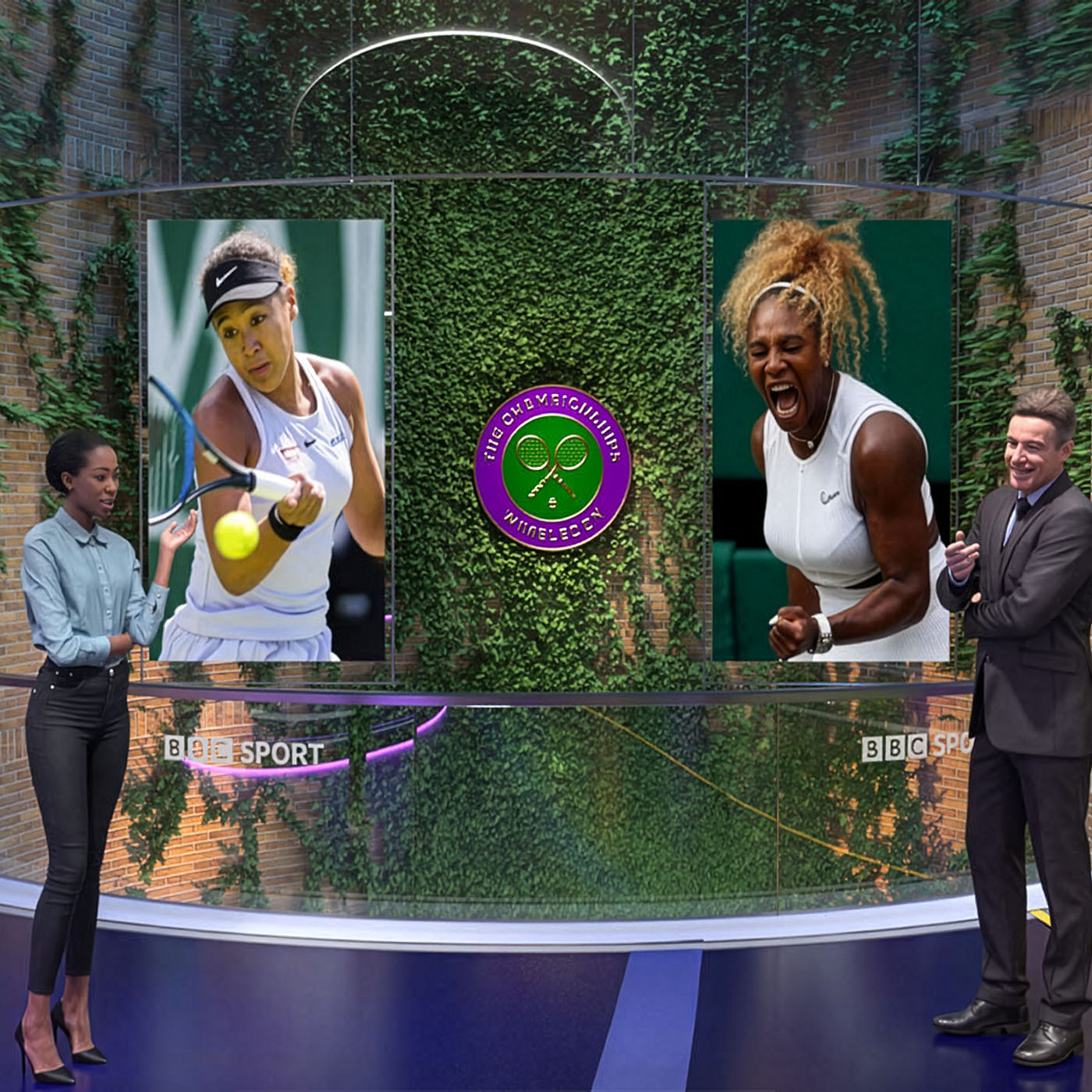
The studio ran on Brainstorm InfinitySet with Unreal Engine running in the background across five cameras - three pedestals, one crane, and a further position fixed within the lighting grid - with Mo-Sys StarTracker handling camera tracking and Blackmagic Ultimatte for keying. The system ran 24 hours a day across 17 days of continuous coverage.
The Result
A virtual studio that didn't just represent Tokyo - it convinced millions of viewers they were watching from there. The production won the RTS Award for Best Sports Programme. It also established the BBC Sport virtual production partnership - Lightwell, BK Design Projects, and Moov - as a benchmark for what was possible in live sports broadcasting, a foundation that every subsequent Olympics and major tournament project has built upon.
The NewscastStudio feature on this project is available here.
Client
BBC Sport
Design
Toby Kalitowski
Jim Mann, Lightwell
Studio Integration
Moov
Studio
Dock10, MediaCity, Salford
Powered by
Brainstorm InfinitySet / Unreal Engine
Camera Tracking
Mo-Sys StarTracker (5 cameras)
Keying
Blackmagic Ultimatte
Graphics
Chyron PRIME / Moov ORION
Awards
RTS - Best Sports Programme