
Met Office Virtual Studio: When the Building Becomes the Set
The Brief
Introduced through a production consultant working with the Met Office, Lightwell was approached directly and invited to propose a design solution. The brief was clear: a multi-space virtual studio that would match the quality of the Met Office's data and the authority of its brand.
The Design Concept
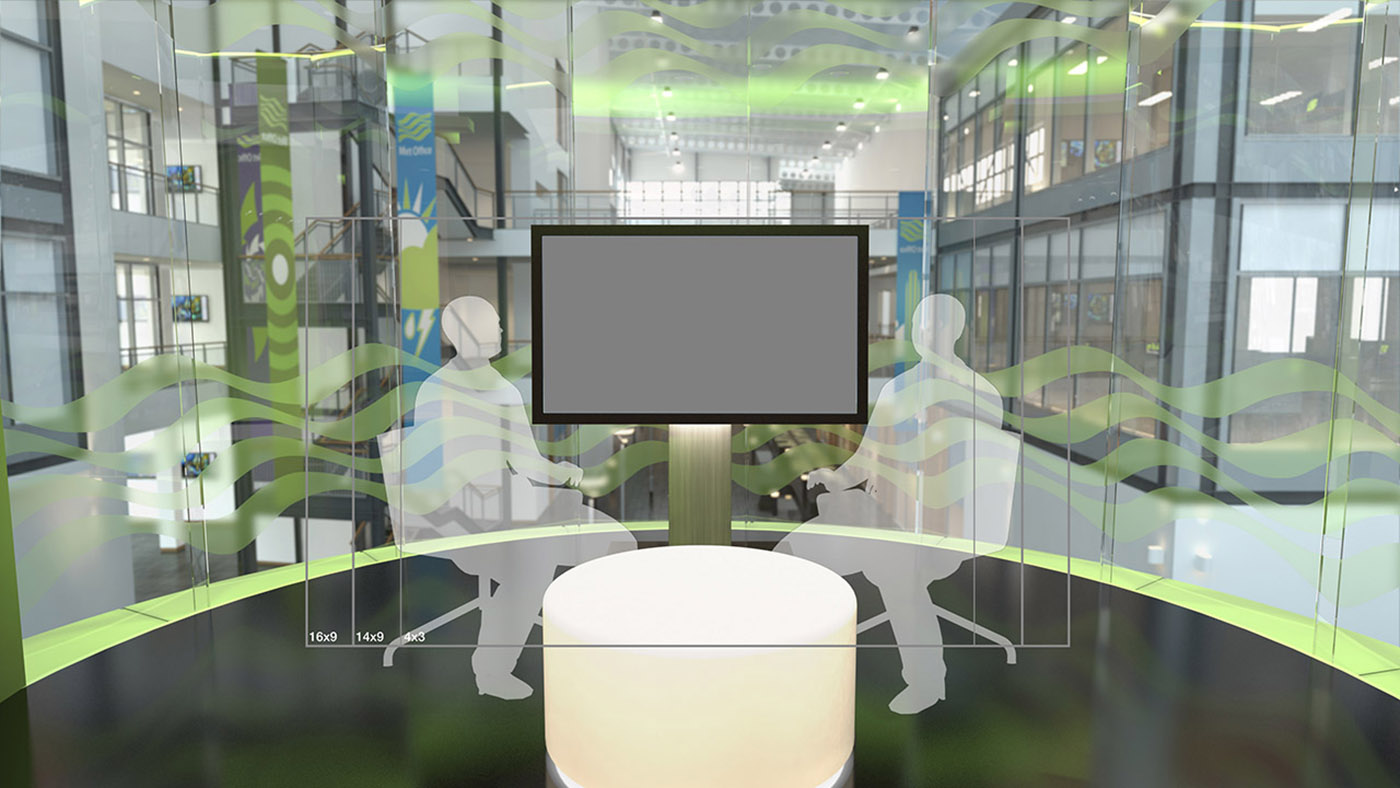
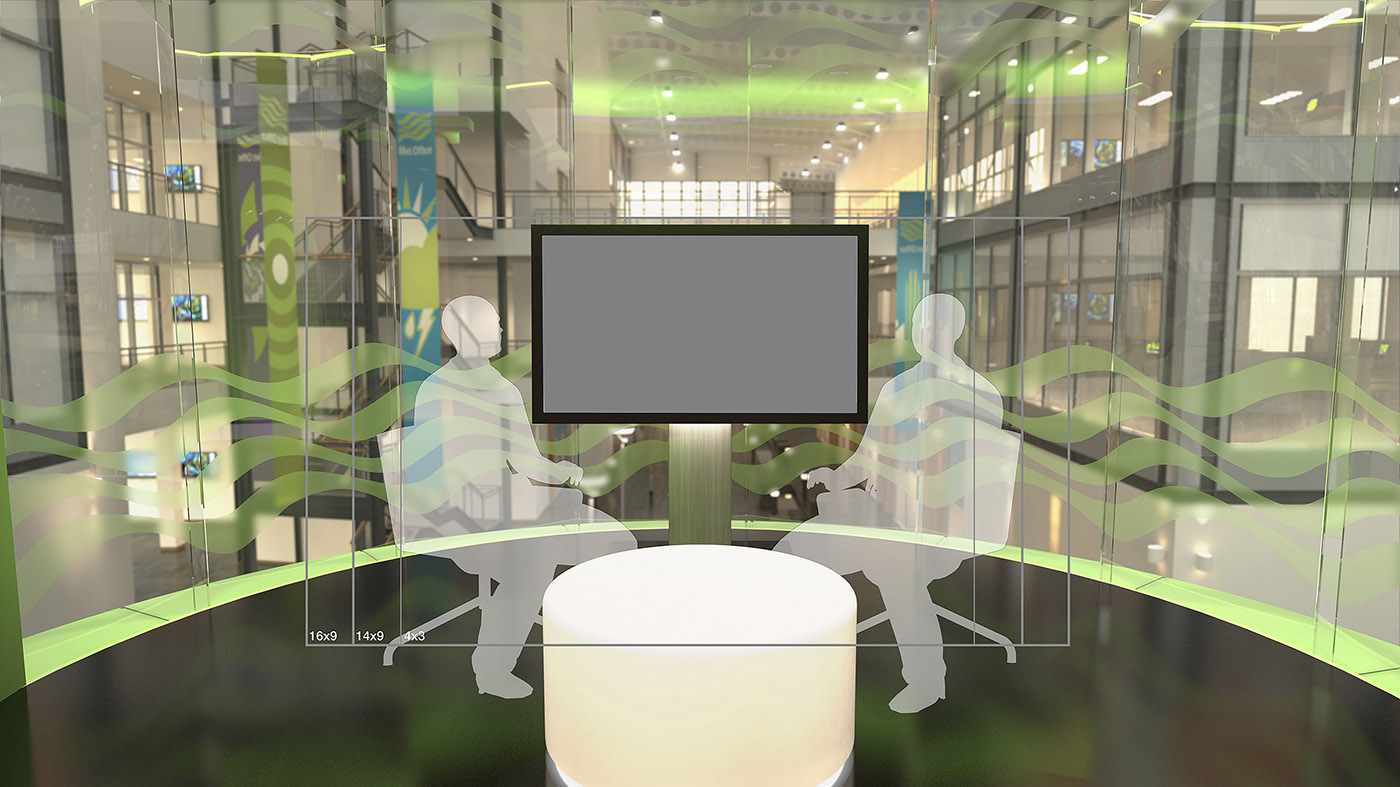
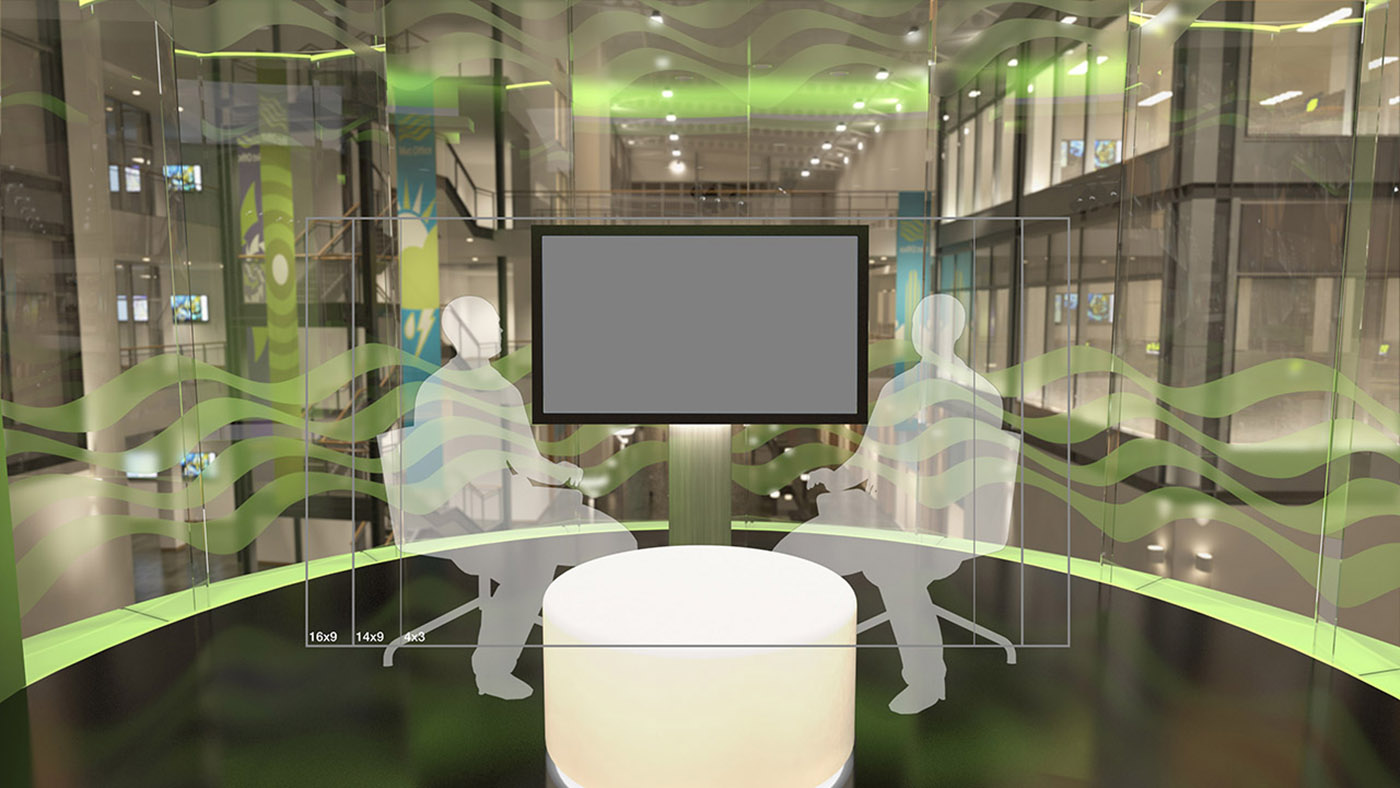
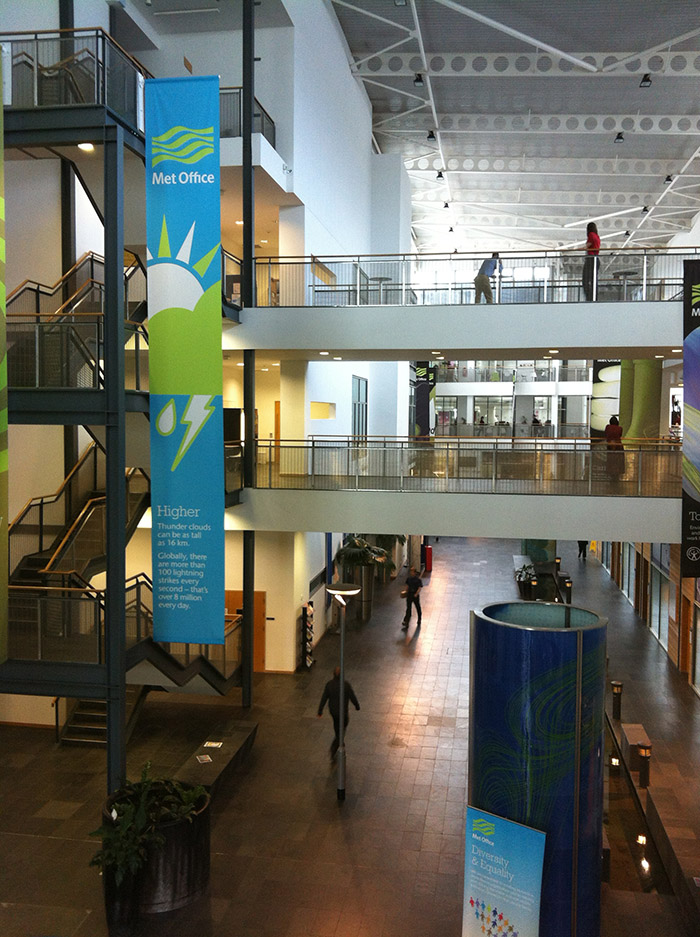
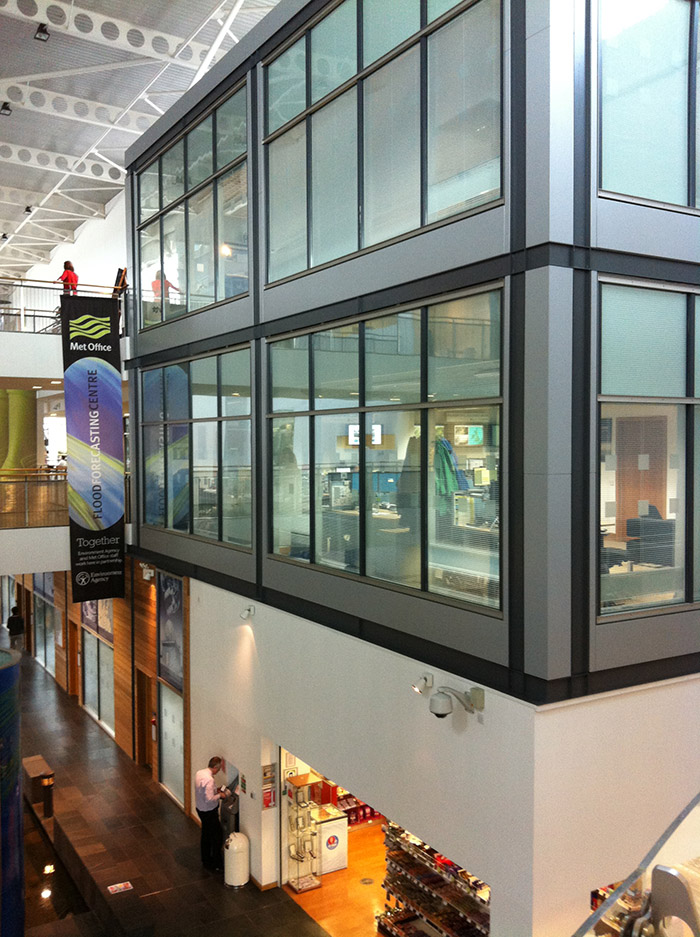
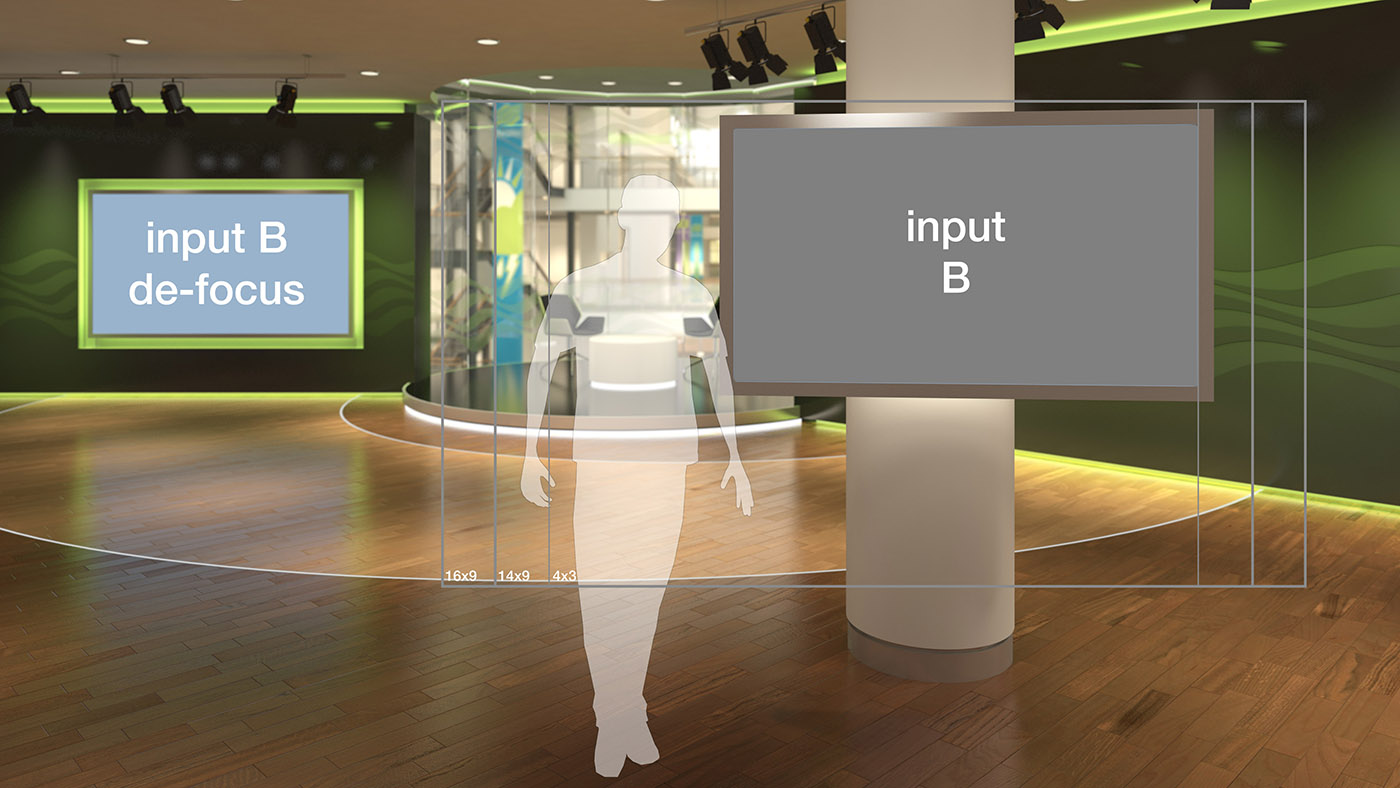
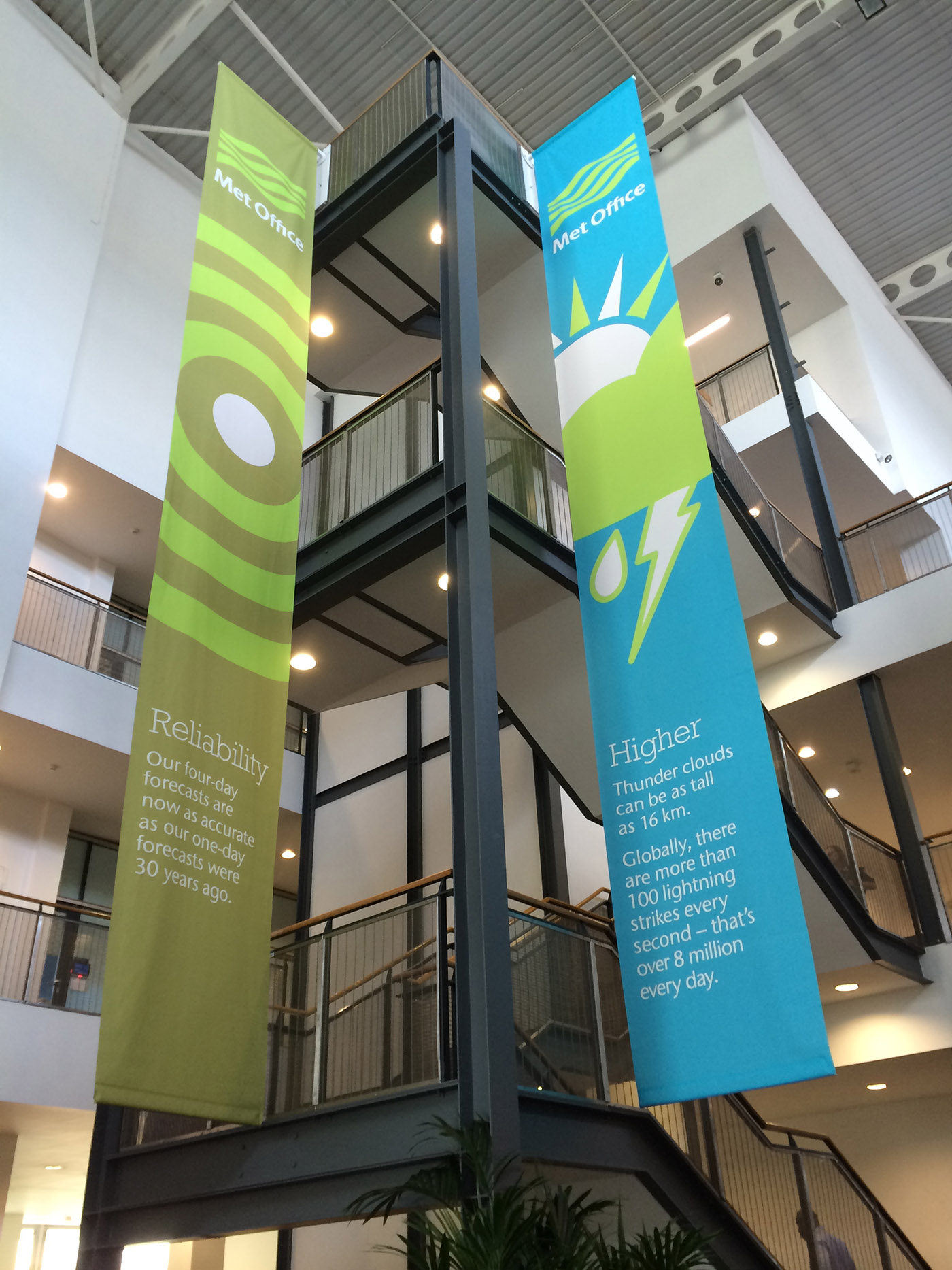
The central design decision was to look not outward for inspiration, but inward - specifically, into the Met Office's own building. The organisation's Exeter headquarters contains a striking interior atrium that functions architecturally as a covered street: a naturally lit, column-lined interior space with the quality and scale of a public building rather than a corporate office. That environment offered something no generic backdrop could: authenticity, familiarity, and a direct connection to the institution itself.
Recreating that atrium as the virtual backdrop - with careful modifications to optimise it for camera - gave the studio an immediate credibility. Vertical banners carrying Met Office graphics and colour palette were introduced throughout the space, integrating the brand naturally into the architecture rather than applying it as a surface treatment. The atrium's covered-street quality also offered something particularly valuable for a weather forecasting studio: the ability to depict different times of day through natural light scenarios, without requiring exterior backdrop environments. Dawn, midday, and evening could each be suggested through the quality of light falling through the virtual roof structure - a subtle but editorially significant capability for a service whose content is fundamentally organised around time.
There was a further editorial benefit that went beyond the studio itself. The Met Office regularly recorded interviews with staff and scientists within the real office spaces of their Exeter building. By grounding the virtual studio in a faithful recreation of that same building, a seamless visual continuity was established between material recorded in the studio and material recorded on location within the real offices. The virtual and the real belonged to the same world - because they did.
Three Spaces, One Environment
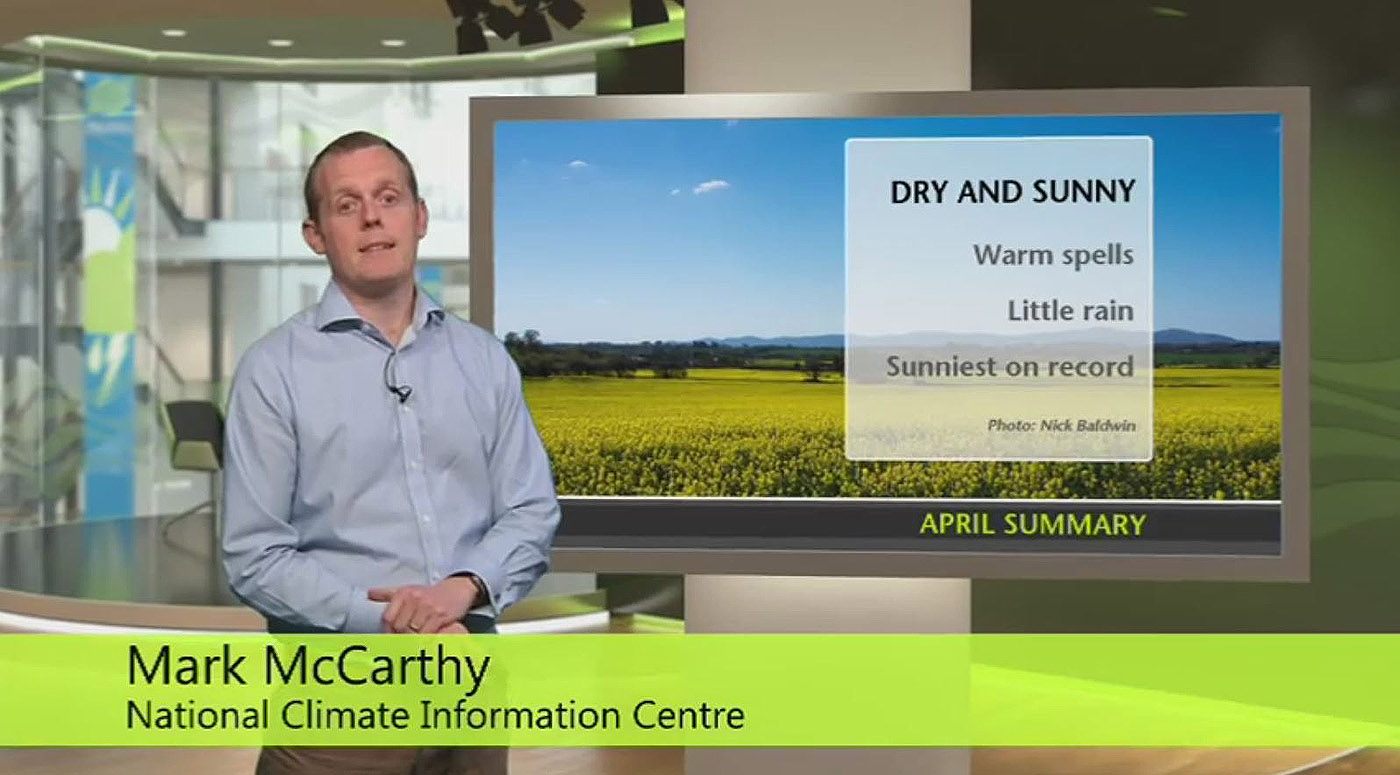
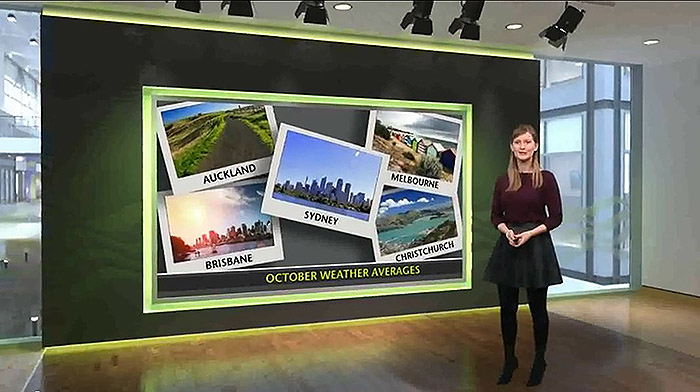
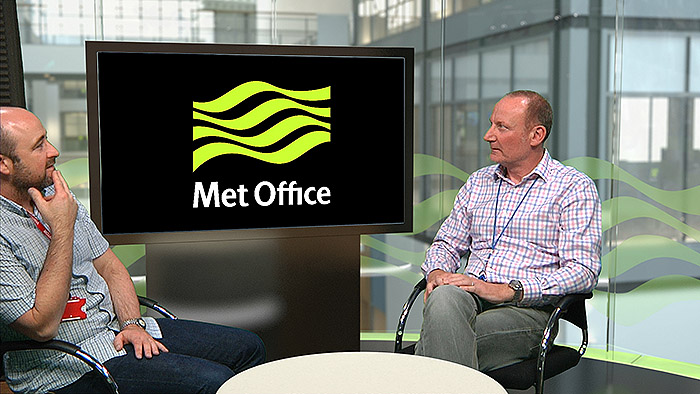
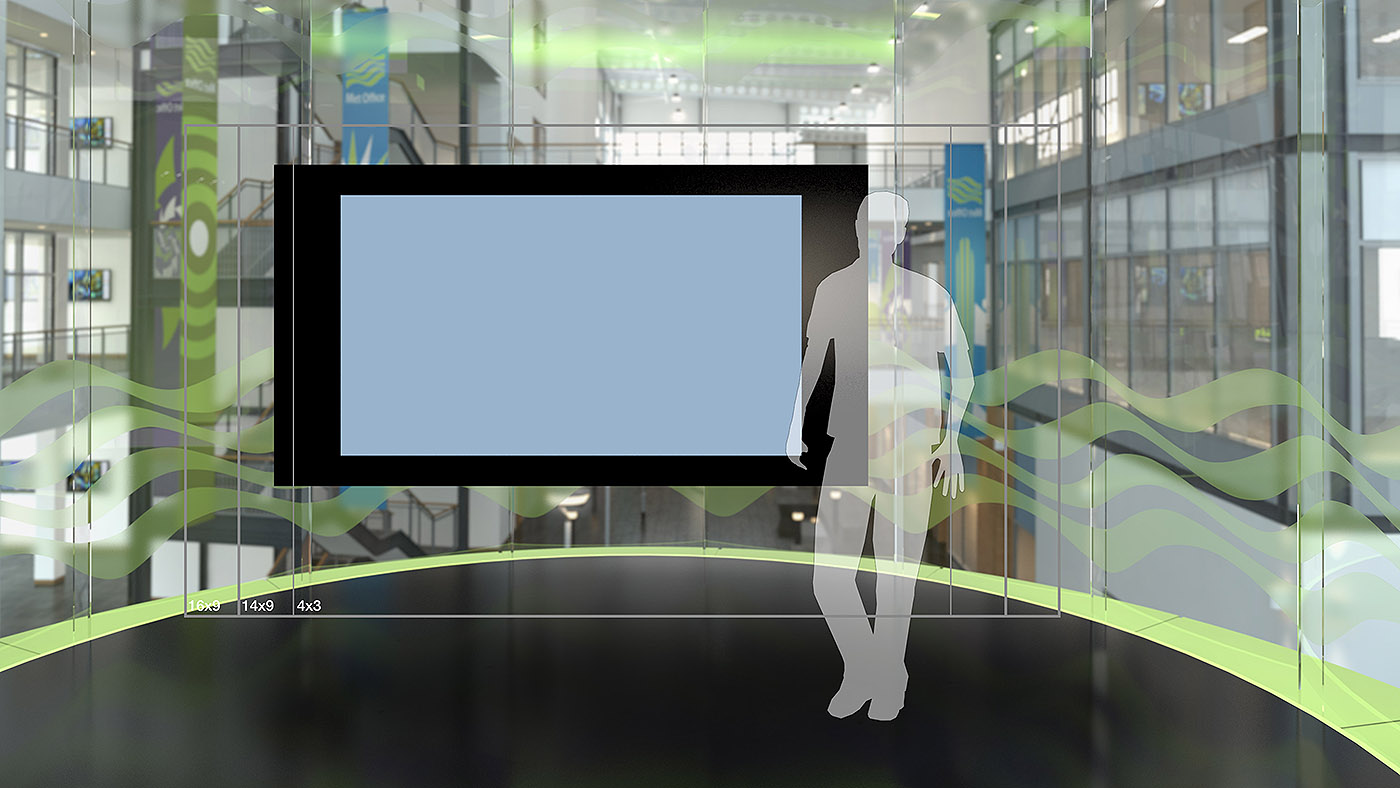
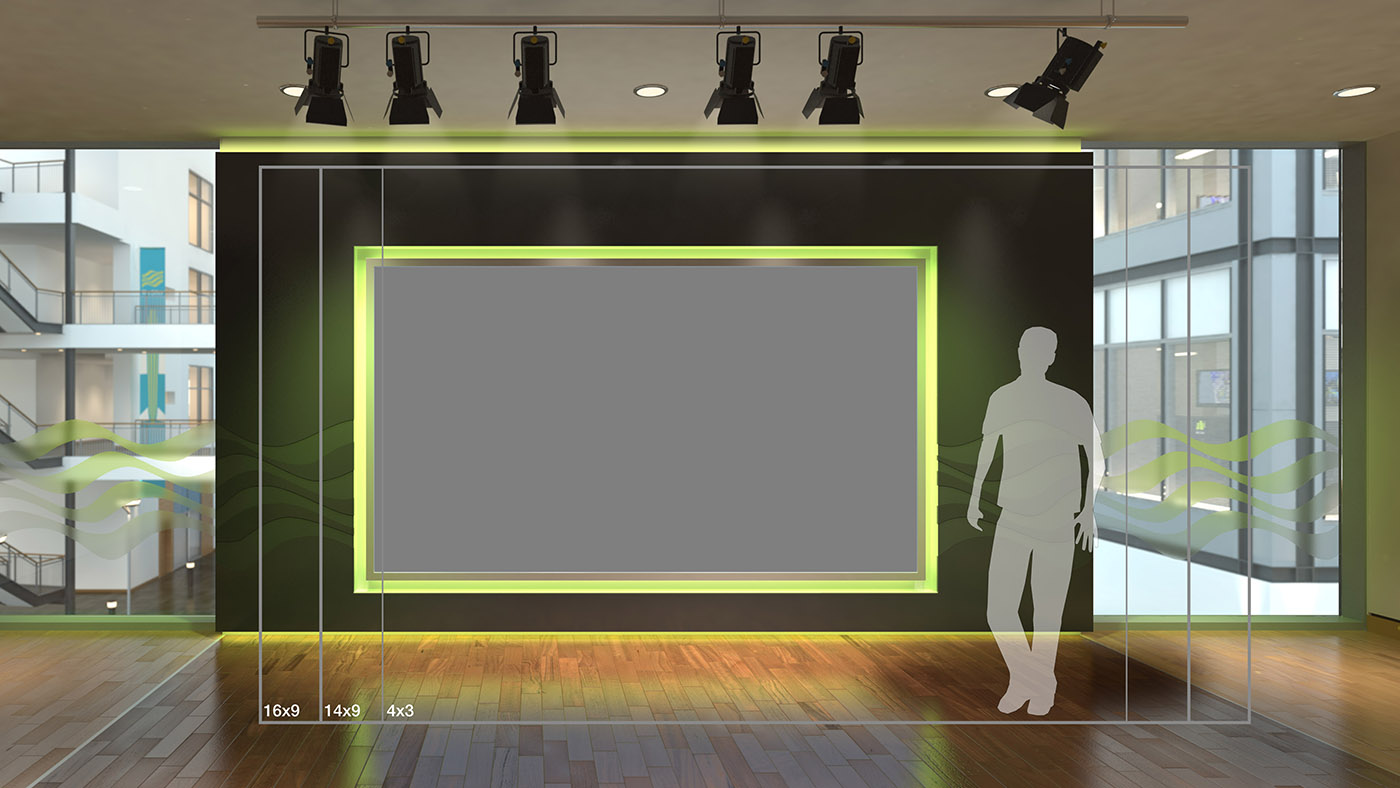
The design delivered three distinct presenting spaces within the single virtual environment. The first revealed the full studio interior, with a column-mounted screen providing a standing presenter position for direct address to camera. The second was a seated area, configured for more discursive or interview-based content. The third was anchored by a large-format screen - a dedicated space for standing presenters to deliver detailed forecast analysis, with the scale and visual authority that complex meteorological data requires.
Each space was developed as part of a single coherent package, though not all at the same pace. Some elements were quicker to complete than others, given the complexity and attention to detail each required. The Met Office production team, keen to begin using the new studio as soon as possible, took each space as it became ready - a phased delivery that meant the studio was already in active use before the final designs were complete.
On Technical Ambition
The Newtek Tricaster is a self-contained production platform with well-understood technical parameters. Lightwell's view - then as now - is that the technical limitations of a platform should never place limits on the design ambition or the visual fidelity of what is delivered. The constraints are real, but they are engineering problems to be solved, not creative ceilings to be accepted. The Met Office studio was designed and built to the highest standard the platform could support, and the results spoke for themselves.
The Result
The new virtual studio reinvigorated the Met Office's entire web output. The designs were so well received that the studio became a regular stop on VIP tours of the Exeter building - a measure of institutional pride that says as much about the quality of the work as any broadcast credit. For Lightwell, it remains a demonstration that virtual set design has value well beyond the world of sports and news broadcasting, and that the principles of architectural design - authenticity, coherence, attention to detail - apply equally wherever a camera is pointed.
Client
The Met Office
Virtual Set Design
Jim Mann at Lightwell