Pre-Visulisation and Design Development
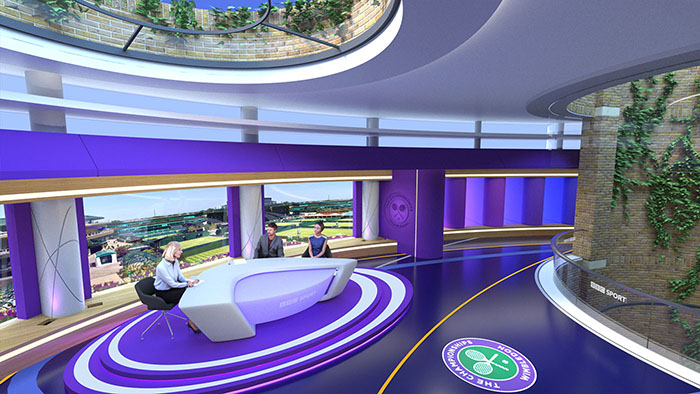
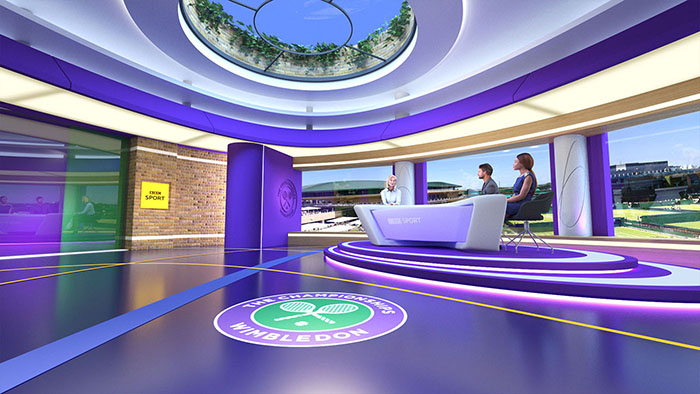
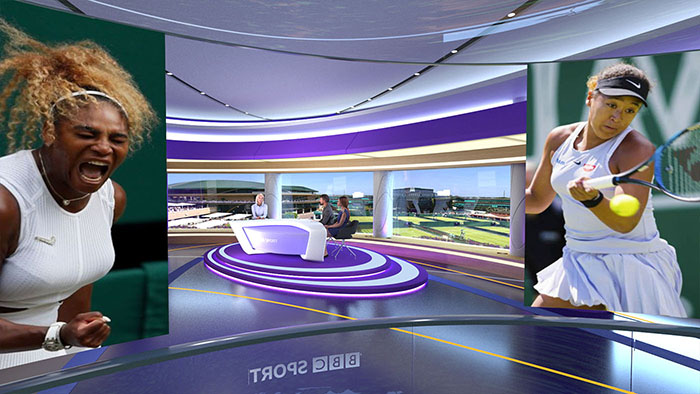
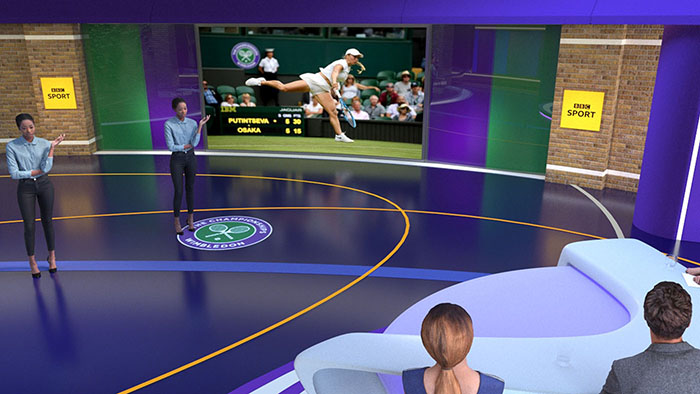
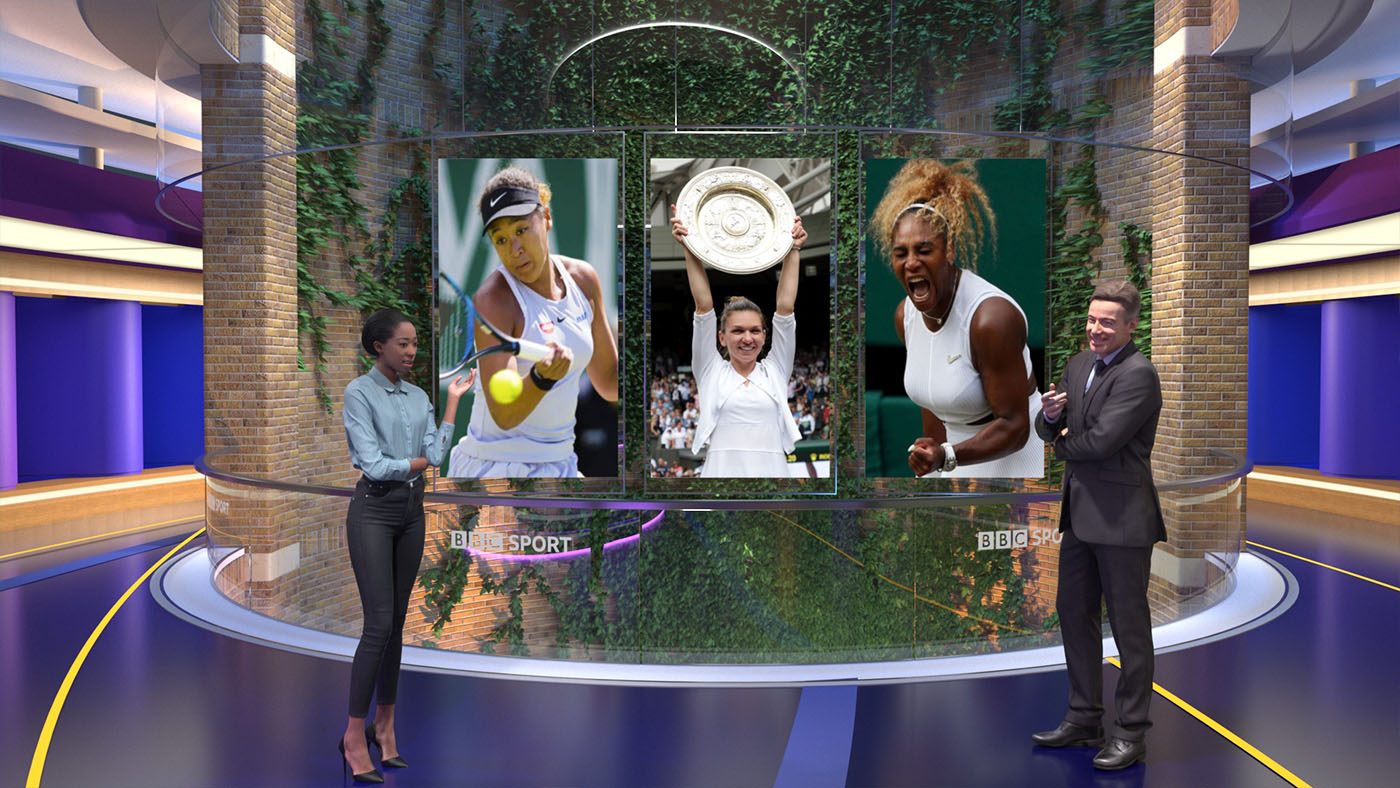
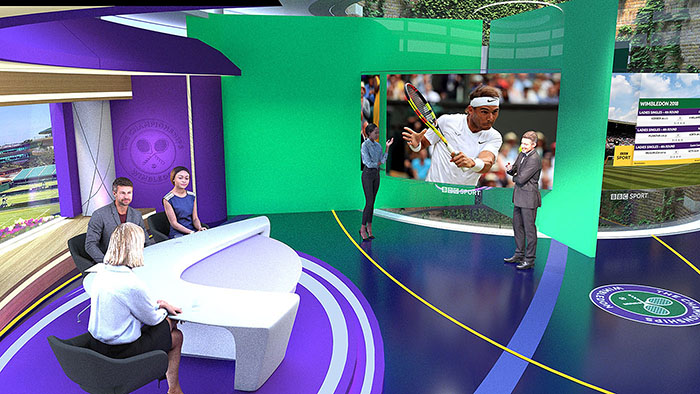
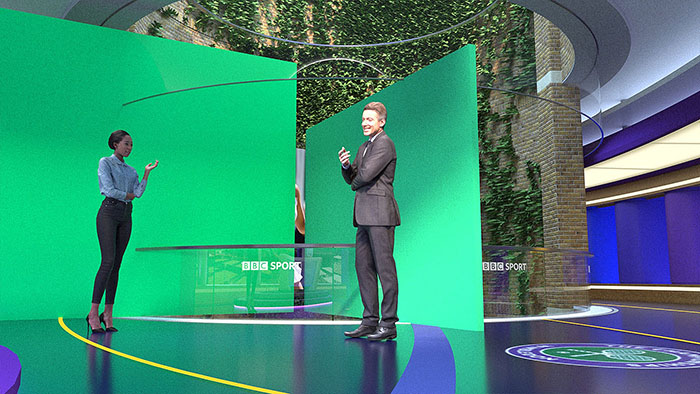
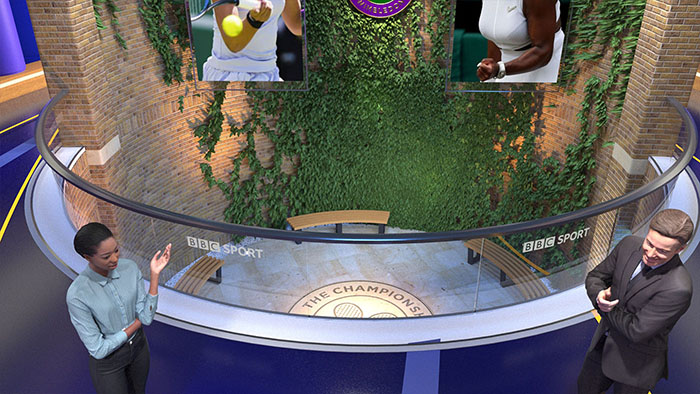
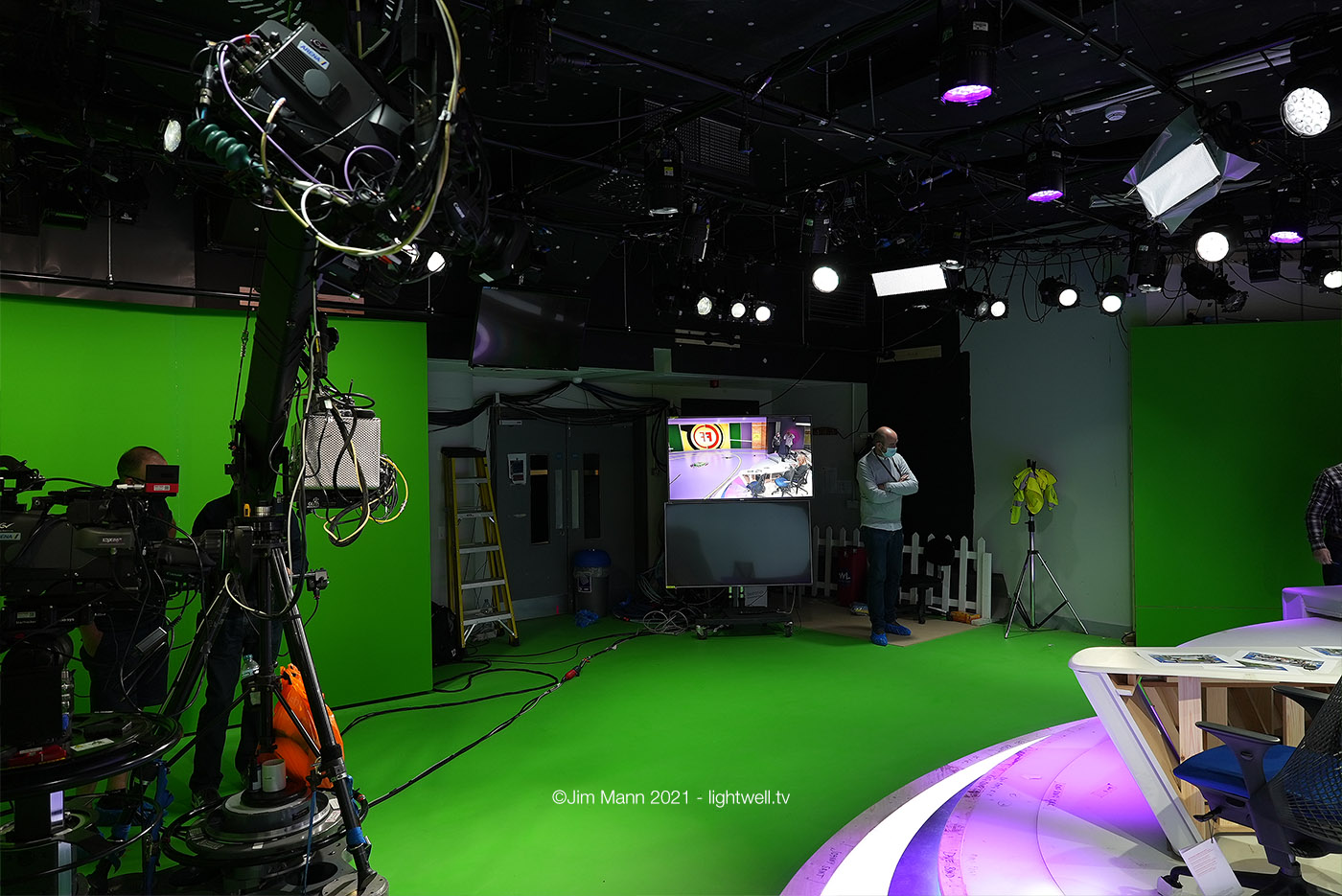
Behind The Scenes Studio Images

BBC Wimbledon: Bringing the Championships Indoors
The Brief
This particular design was a joint project with long-standing Lightwell collaborator Toby Kalitowski of BK Design Projects.
Lightwell's role was central to the project's success. From initial concept through to installation and broadcast, Lightwell provided detailed pre-visualisation of camera positions, shots, and moves, and played a defining role in establishing the scope and coverage of the greenscreen area. That last responsibility required rigorous, knowledgeable planning - and its importance to the finished result cannot be overstated.
The Design Concept
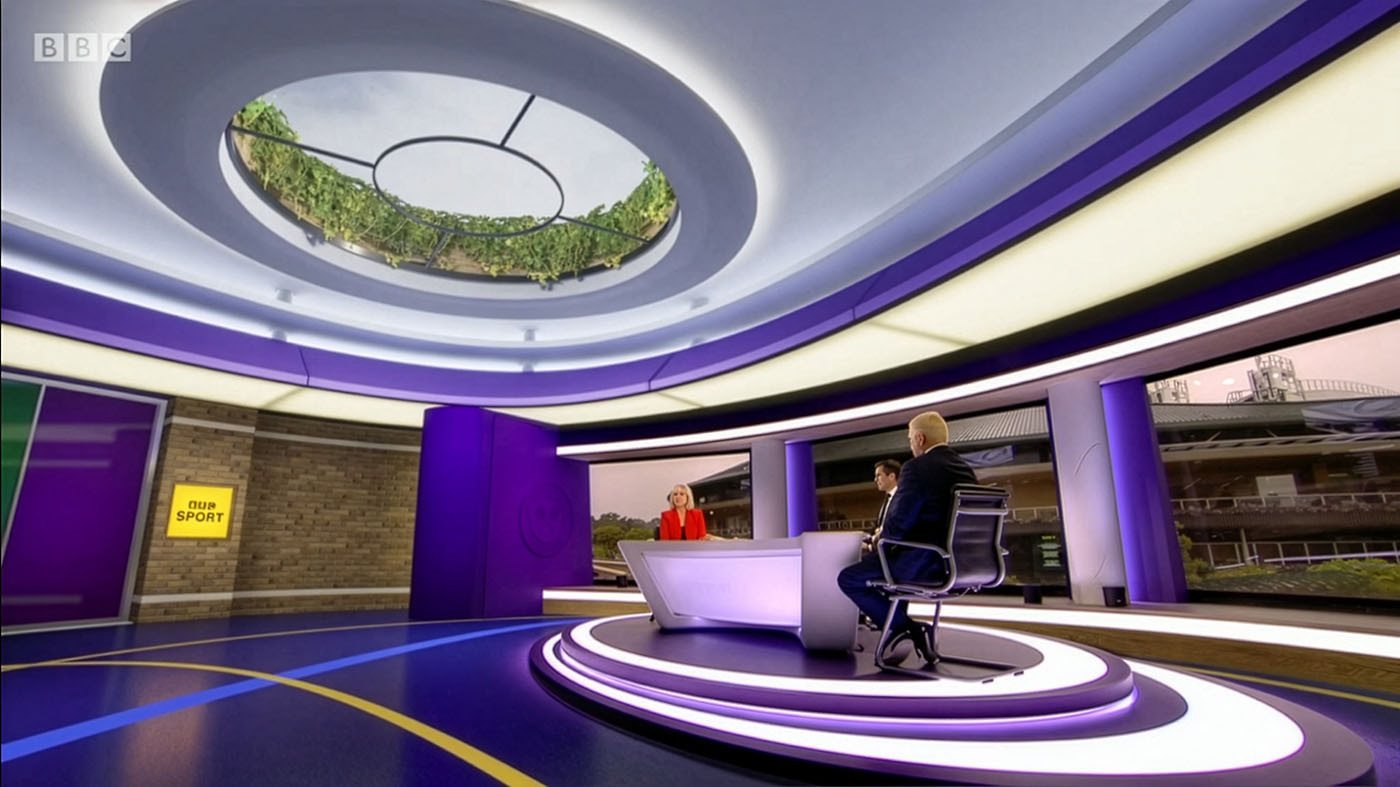
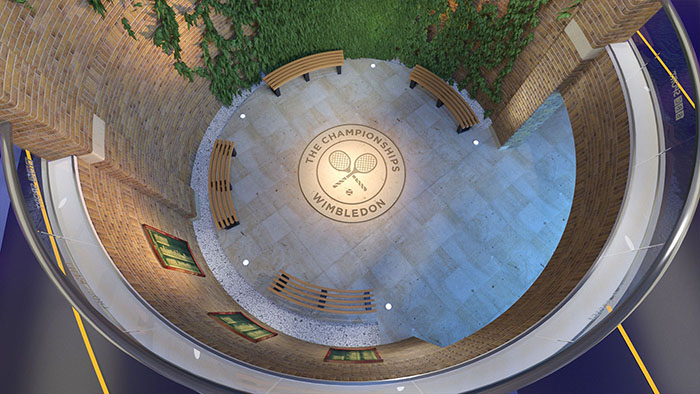
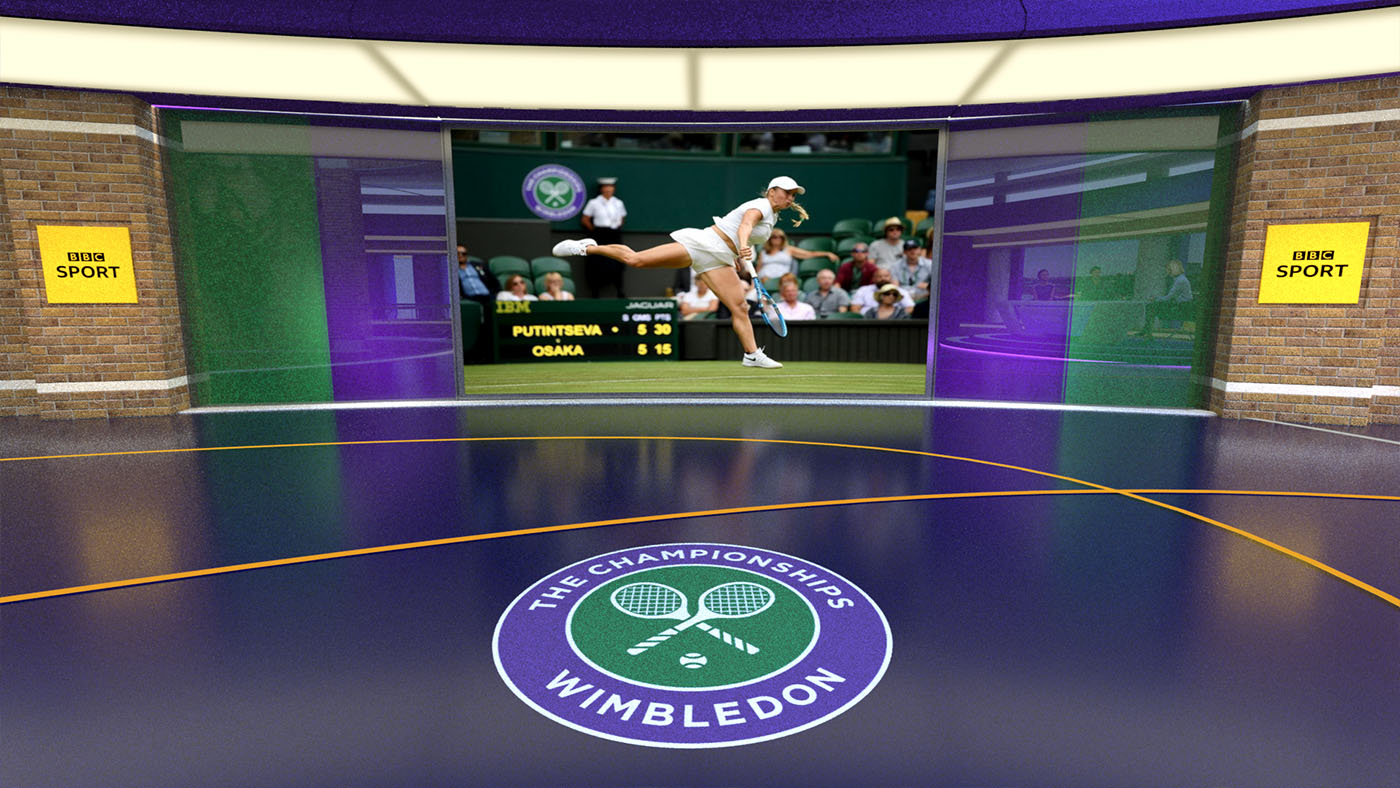
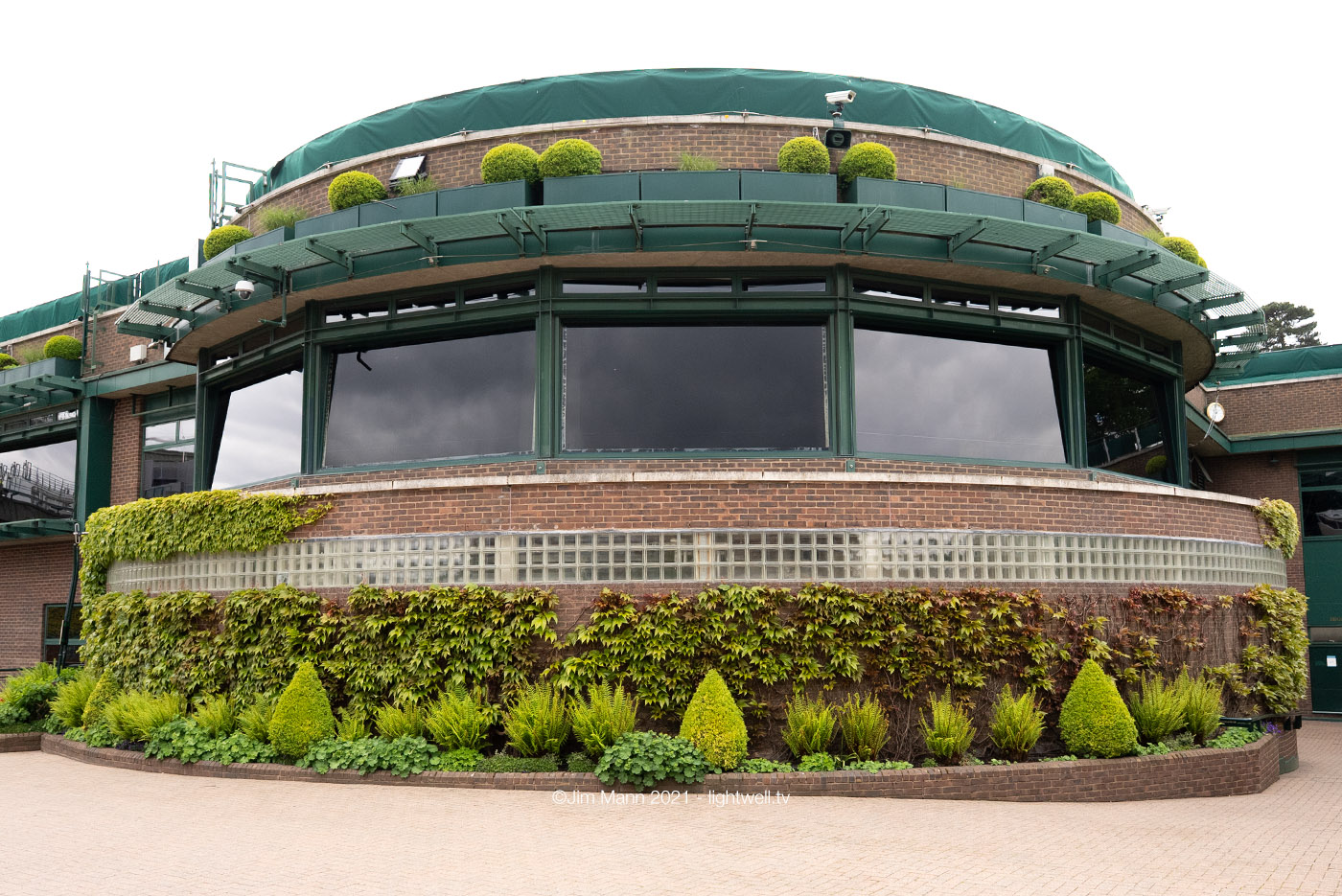
The brief demanded a studio that felt architecturally credible and unmistakably rooted in Wimbledon. The design draws on the characteristic material palette of the All England Club and its surroundings: London stock brick, stone detailing, and the club's distinctive green and purple brand colours applied throughout. Most evocatively, the climbing ivy characteristic of Wimbledon's courts and buildings is carried into the virtual interior, bringing an immediate sense of place to a studio that never physically leaves the building.
The result is an architectural interior that functions as a convincing, coherent space in its own right - not a decorated backdrop, but a room with genuine material character and spatial logic.
The Hybrid Challenge
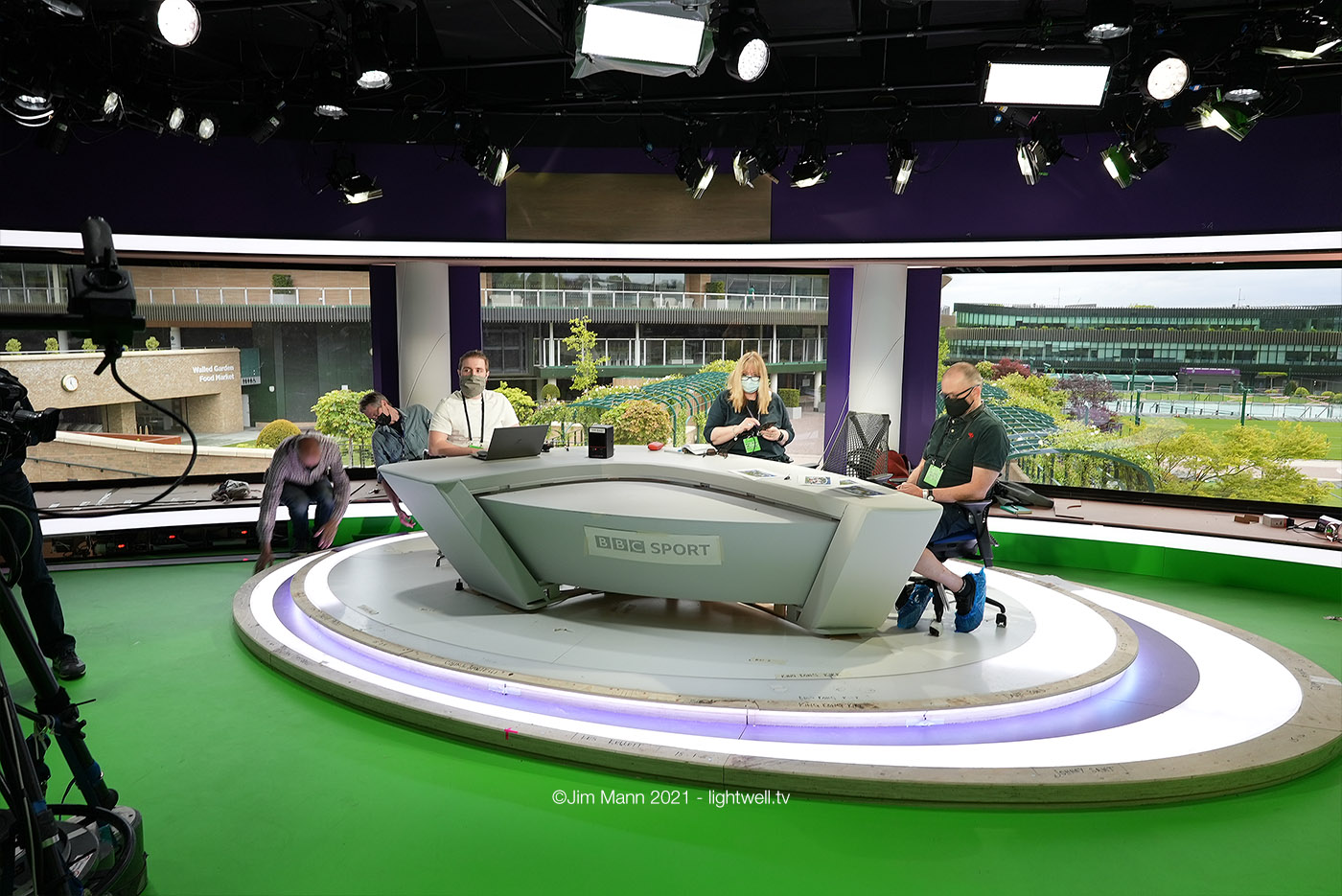
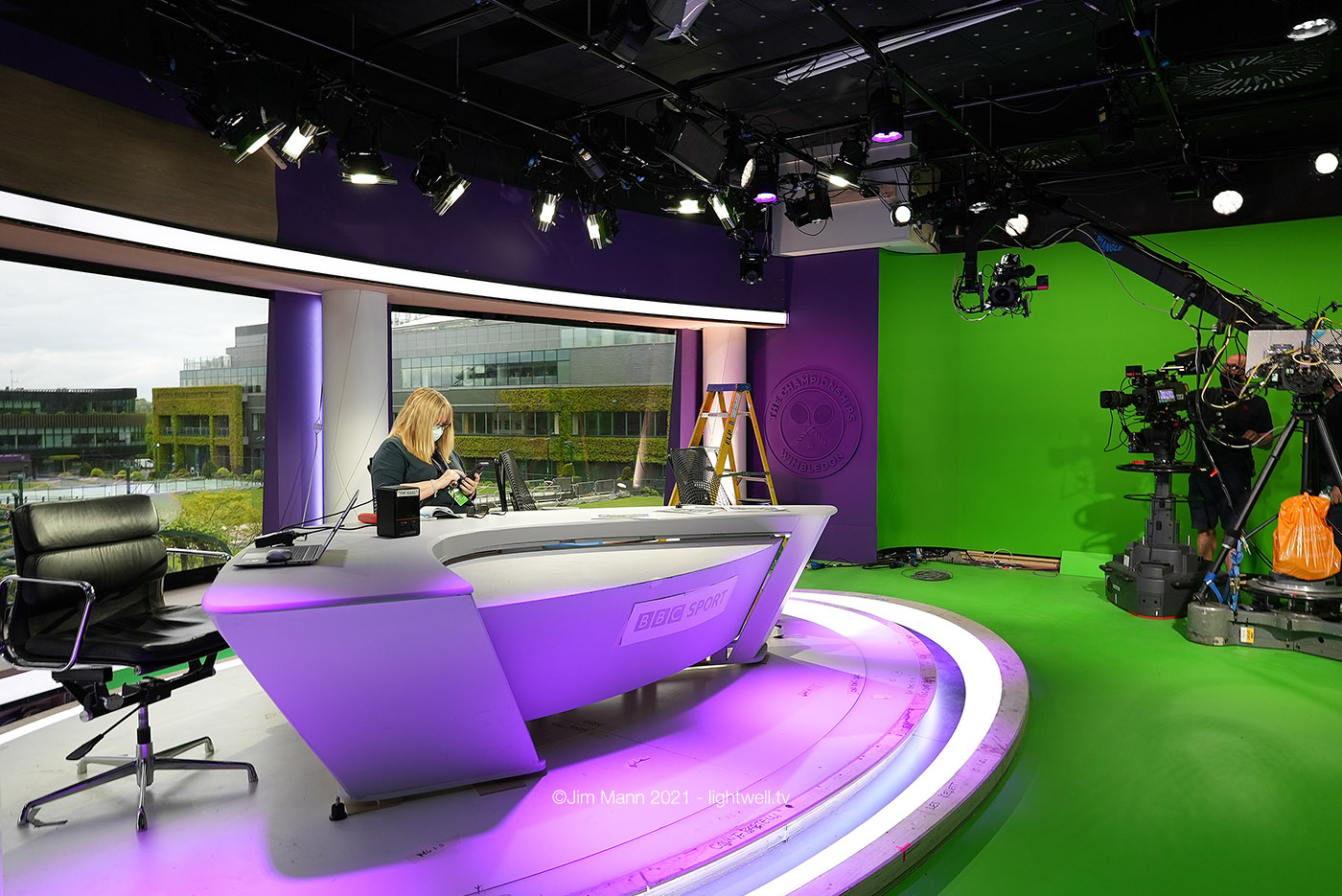
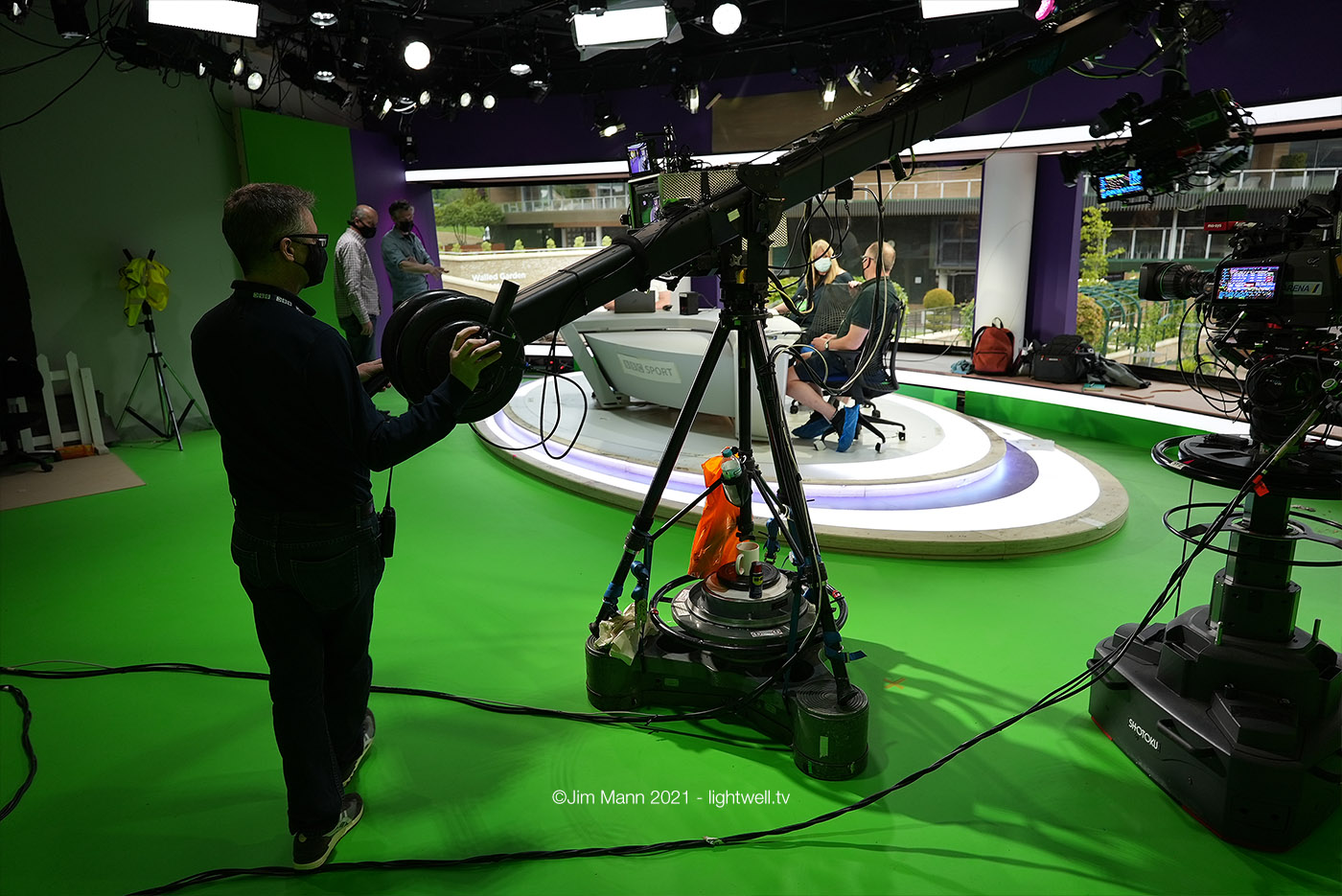
The studio combines three distinct elements: a real physical set, a greenscreen area for virtual extension, and masked areas where the virtual environment is introduced without greenscreen. Presenters could operate freely in front of the real set or within the greenscreen zone, but not in front of masked areas - a constraint that required careful definition of every presenter position and camera angle before a single piece of set was built.
The greenscreen area was deliberately kept to a minimum. Lighting greenscreen evenly in a constrained studio space is demanding enough; the additional complication here was the risk of green walls and floor reflecting in the studio's windows, which would have compromised the entire virtual extension. Balancing the need to minimise greenscreen against the need to give presenters sufficient operating space was one of the central planning challenges of the project.
This is precisely where Lightwell's pre-visualisation work proved essential. Detailed rendered stills of every significant camera position were prepared and refined before installation, establishing the exact boundaries of the greenscreen area and confirming that every planned presenter position and camera move was viable within those boundaries. Pre-visualisation of this rigour is not a convenience - it is the difference between a hybrid solution that works cleanly on air and one that reveals its compromises under broadcast conditions.
The Result
A hybrid virtual studio that has served BBC Sport's Wimbledon coverage continuously since its launch in 2021 and remains in use today. Its longevity is a testament to the quality of the original design and the thoroughness of the planning that preceded it. By combining real architectural materials with a carefully resolved virtual extension, the studio achieves something that neither a purely physical nor a purely virtual set could deliver alone: the warmth and credibility of real materials, and the spatial freedom of a virtual environment, working together as a single coherent whole.
Client: BBC Sport
Design: Toby Kalitowski, BK Design Projects
Design (Virtual): Jim Mann, Lightwell
Unreal Engine Build: Moov
On Air: 2021 — present