
ITV Sport FIFA World Cup 2026: A New York Loft with a View
The Brief
Design was led by long-standing Lightwell collaborator Toby Kalitowski of BK Design Projects, who began concept development in early 2025. Lightwell was involved from the outset as an integral part of the design team, bringing the specialist knowledge of virtual set production that the project required. That expertise shaped the fundamental approach: establishing how a virtual extension could be achieved within this specific environment, defining the constraints this placed on the physical set design, and ensuring that every decision made in the physical world supported what needed to happen in the virtual one.
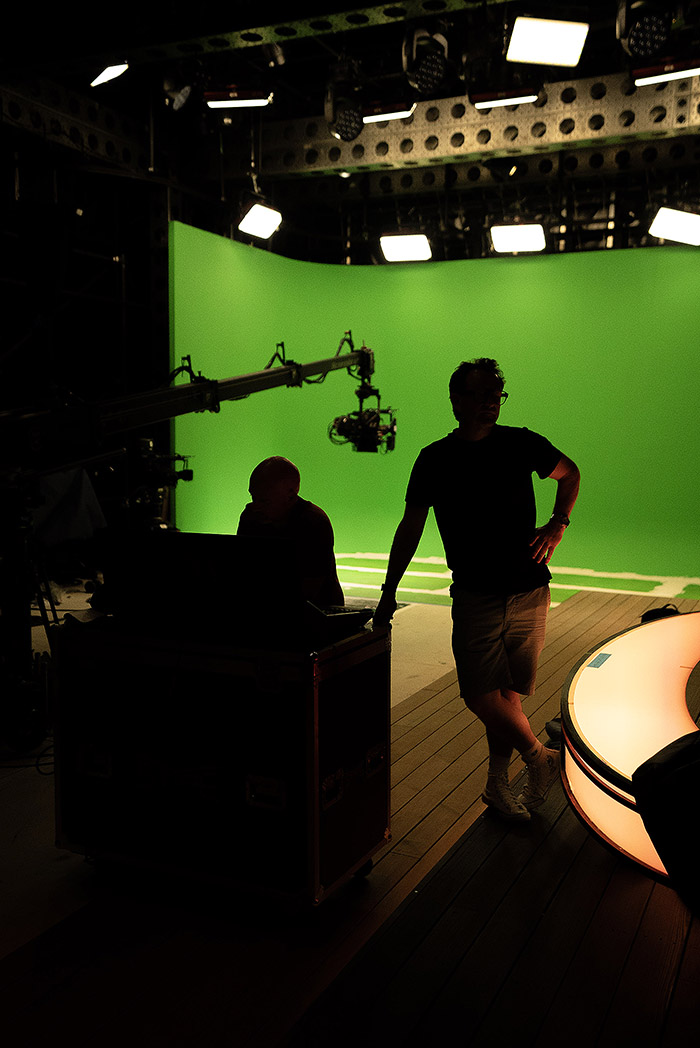
Getting the relationship between physical and virtual right is not a secondary consideration - it is the foundation on which the entire production rests. The placement of greenscreen panels, the specification of camera tracking systems, the organisation of the physical set itself - all of these require deep, practical knowledge of how virtual sets actually work in broadcast conditions. Lightwell provided that knowledge at every stage, from initial concept through to on-site technical rehearsals in Brooklyn.
The Location
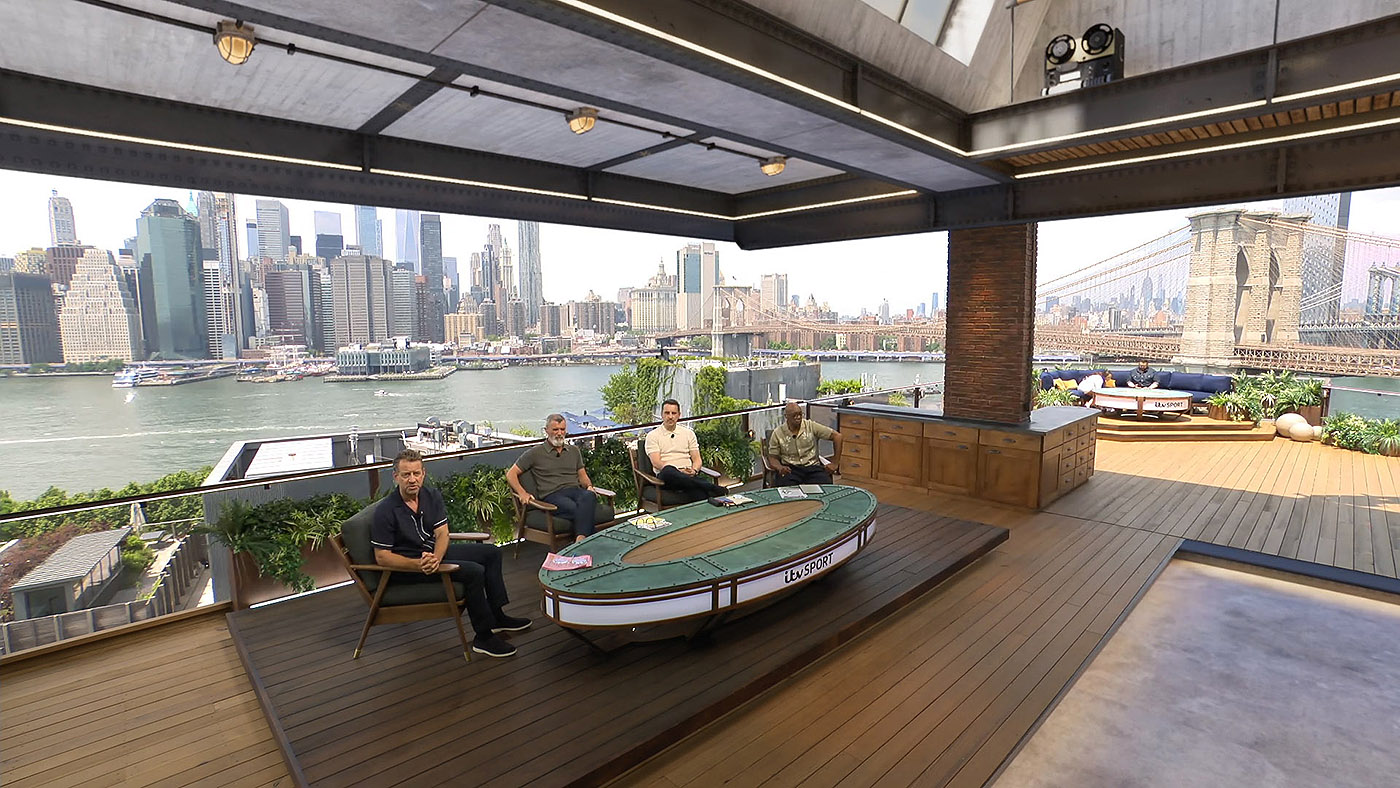
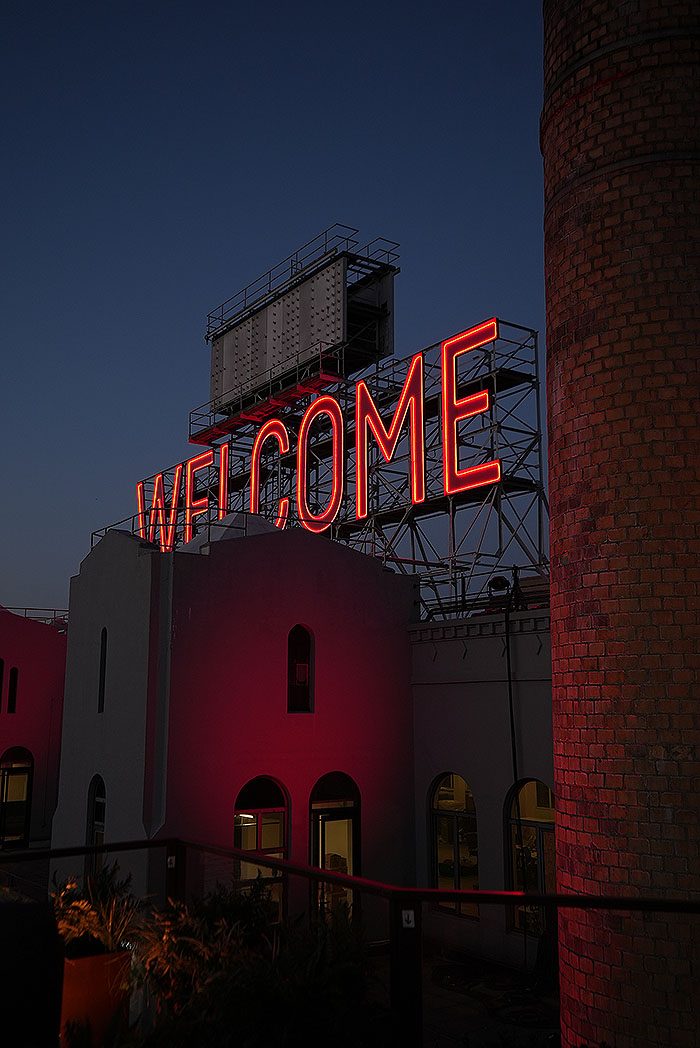
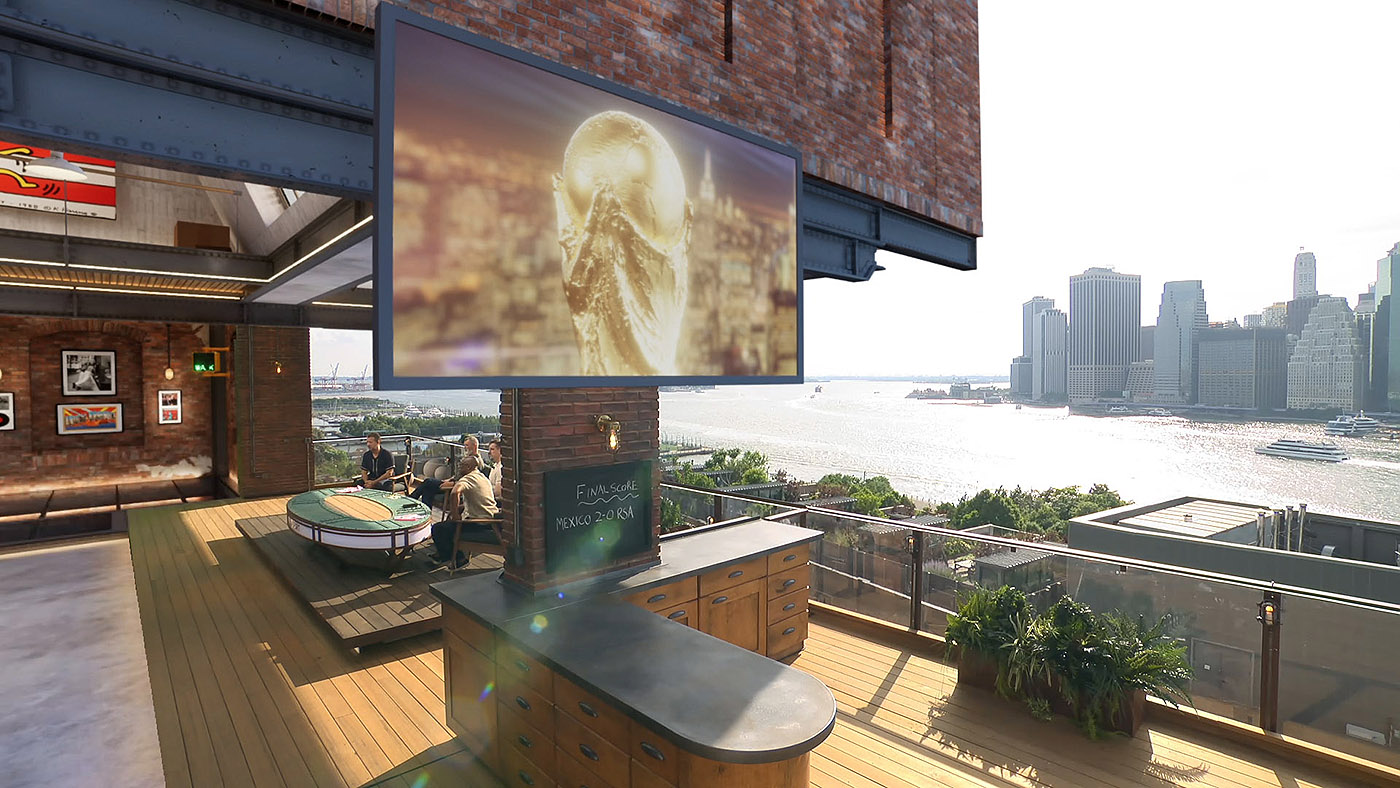
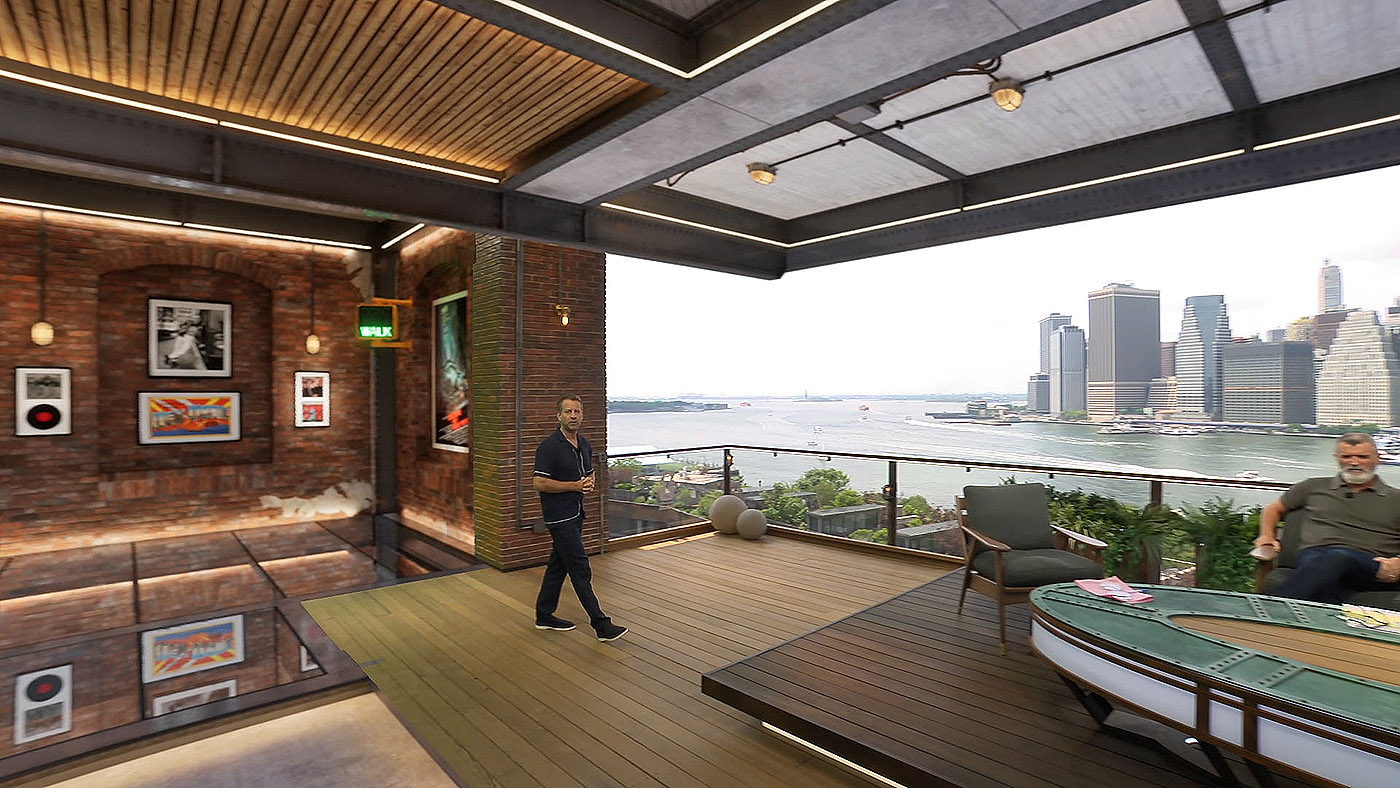
The studio occupies a temporary stage structure built on the roof terrace of a twelve-storey office building immediately adjacent to the Brooklyn Bridge. It is, by any measure, an extraordinary location. The set is open on two sides, offering unobstructed views of the Manhattan skyline and the Statue of Liberty, with the Brooklyn Bridge framed by scenic elements on a third side. The physical environment was still under construction as technical rehearsals began, a reminder that in live broadcast, the timeline never waits.
The Design Concept
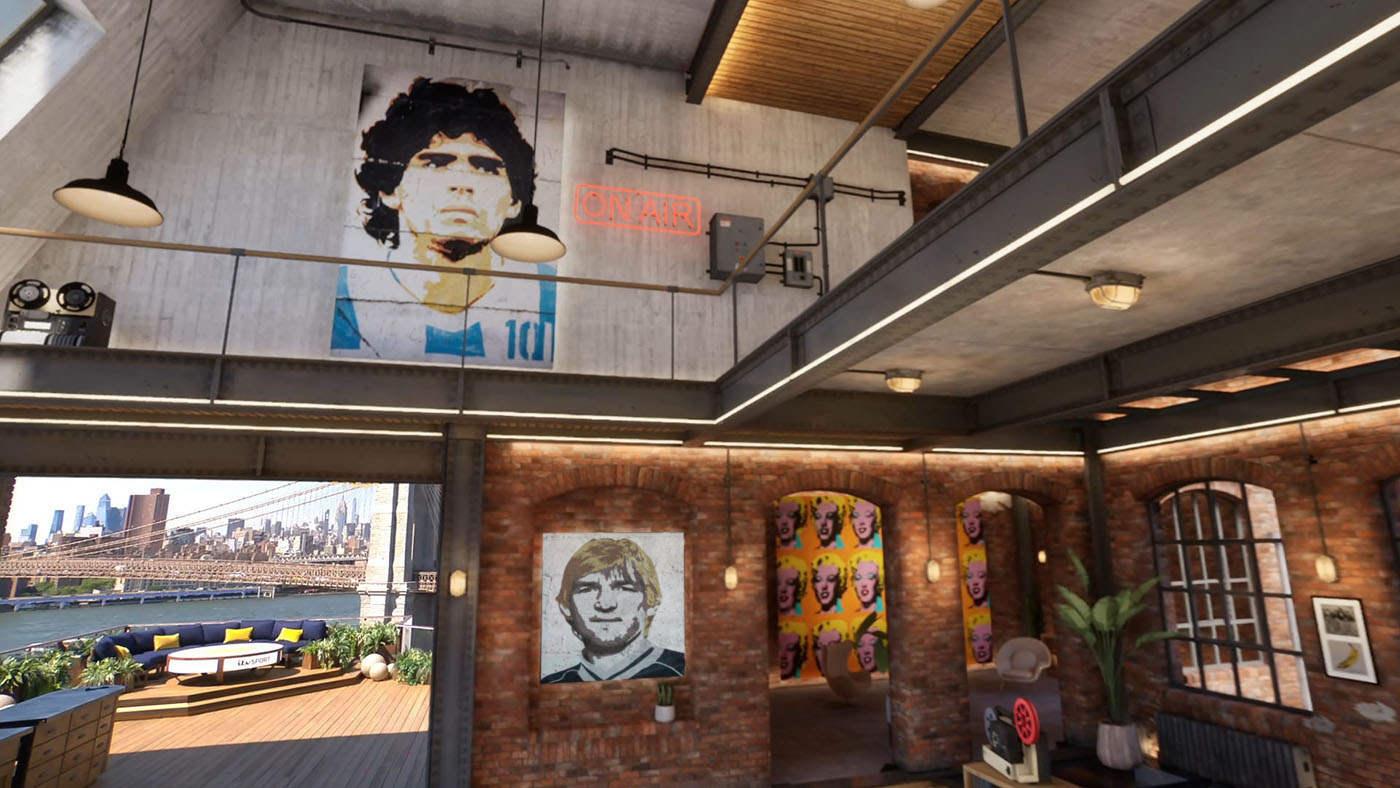
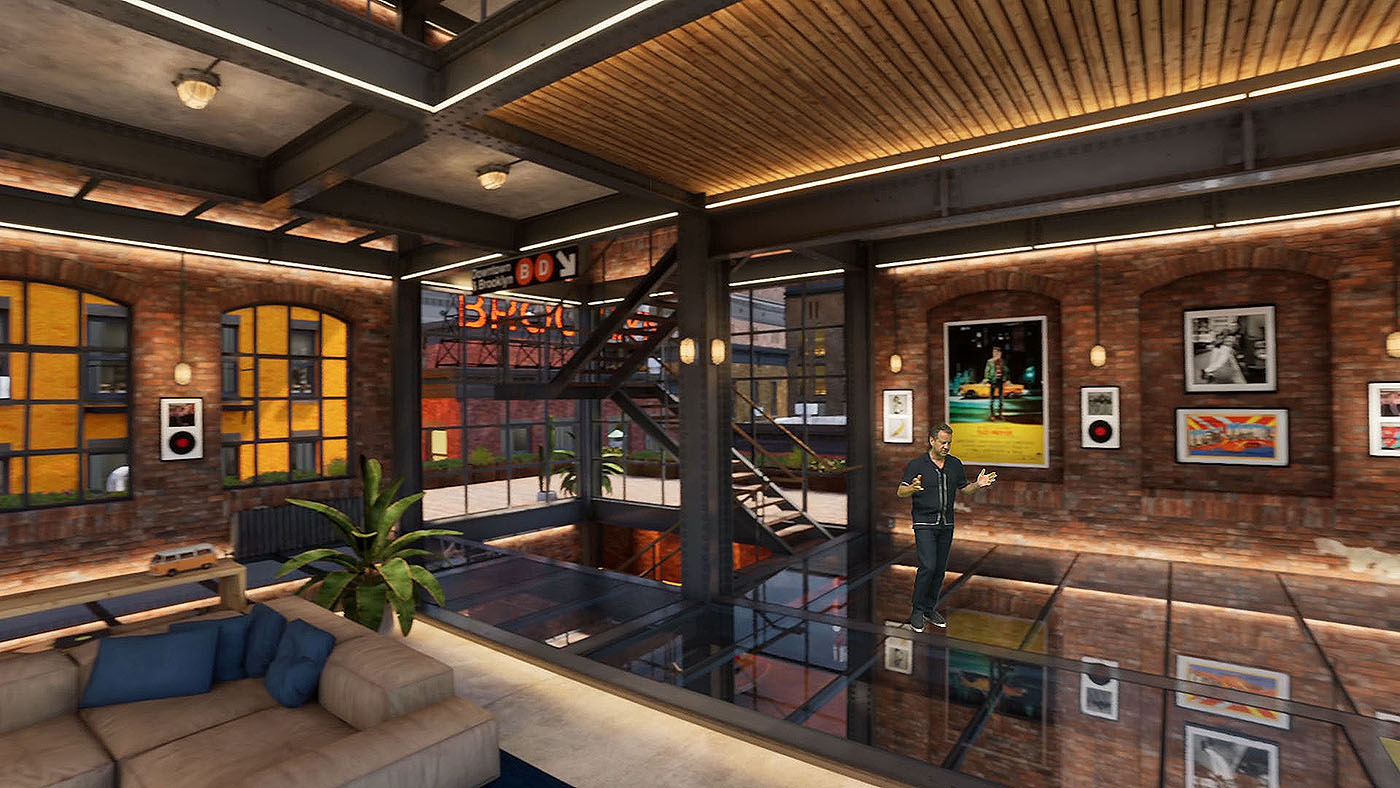
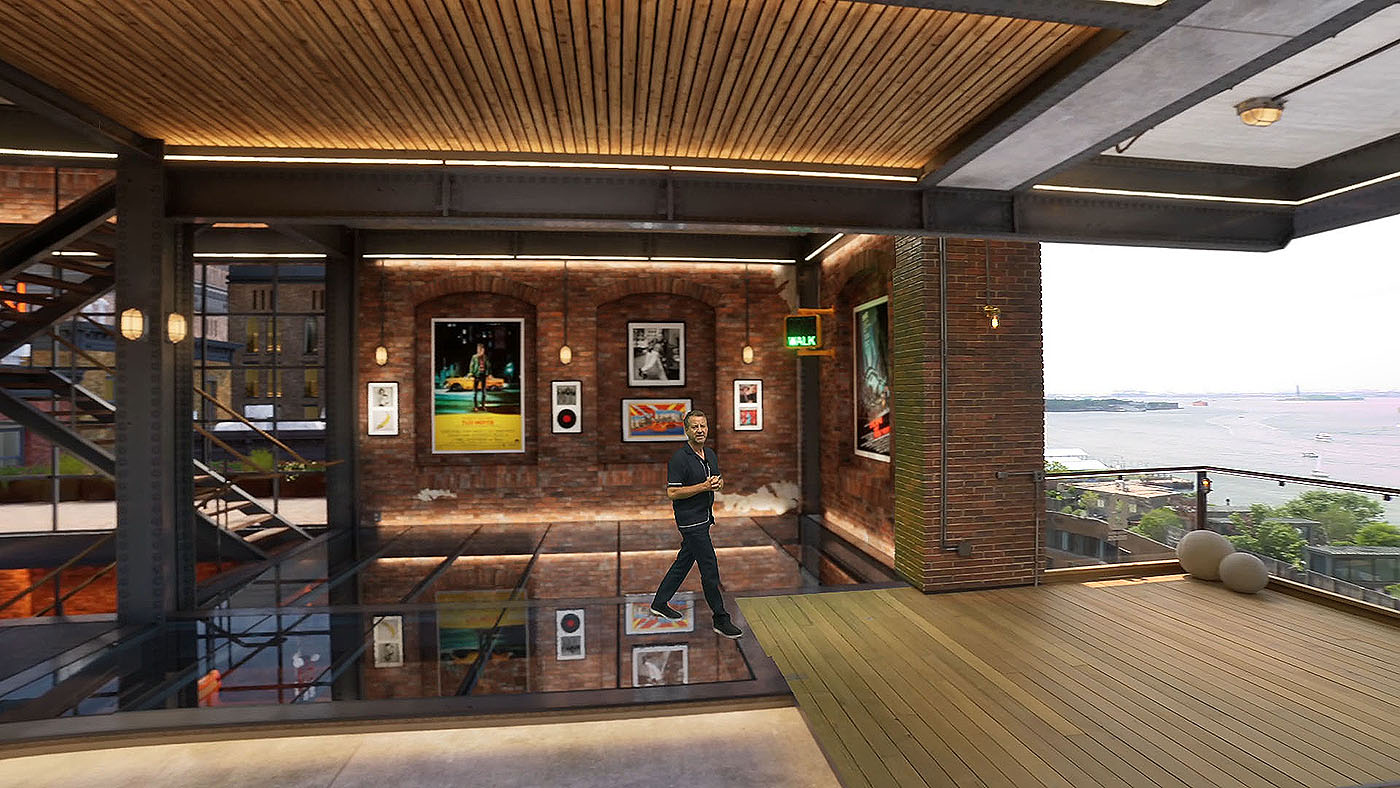
The concept places ITV Sport's World Cup coverage within a New York loft apartment, a spacious, characterful interior that feels rooted in its location without being merely picturesque. The aesthetic is warm and lived-in: exposed structure, considered materials, the kind of space that suggests history and personality rather than corporate anonymity.
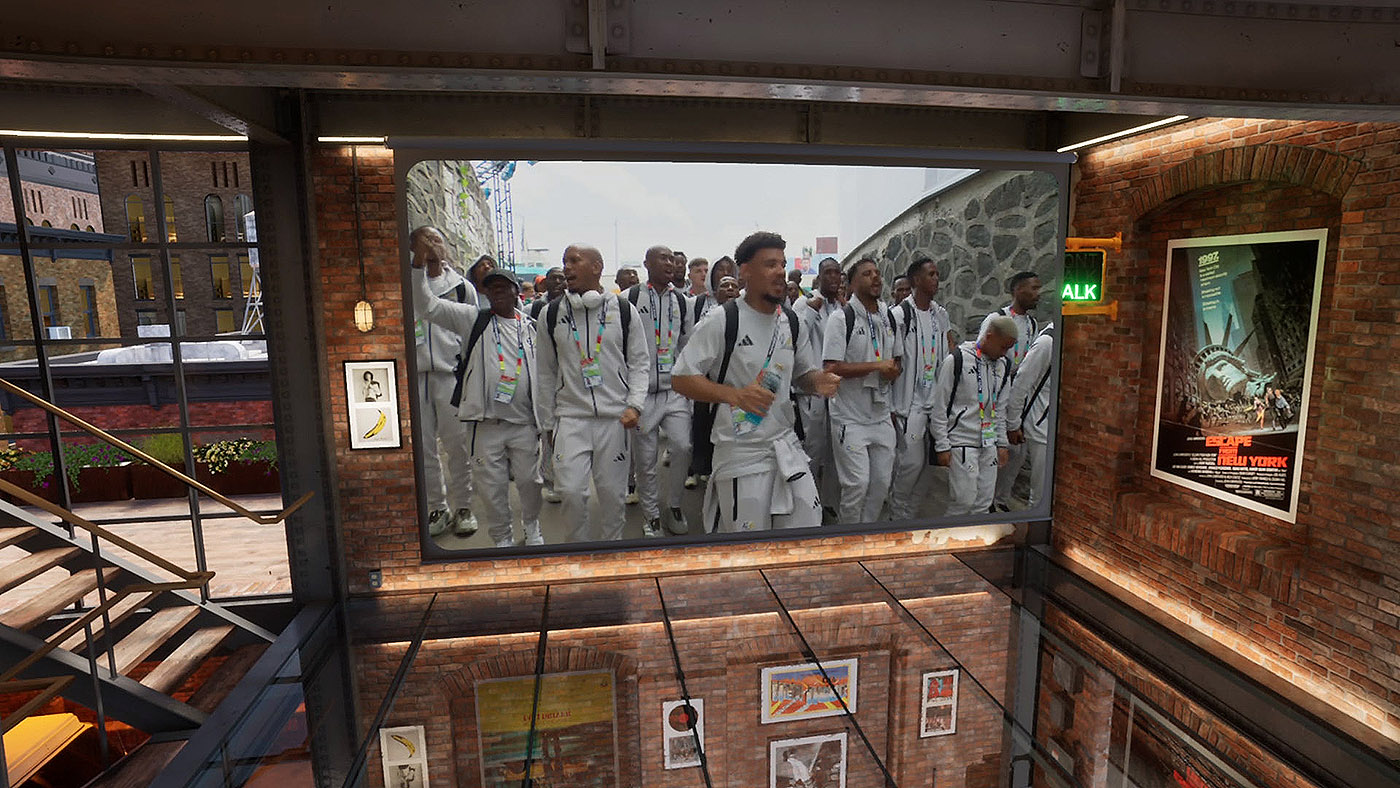
This was achieved through a virtual set extension that wraps the main camera positions in a full 360° environment, expanding the physical rooftop stage into a complete architectural world. A group of screens, styled after vintage pull-down projector screens, provide the primary display surfaces for match data, graphics, and editorial video content. This is a deliberate aesthetic choice that connects the studio to the tournament's title sequence, which was shot on 16mm film and follows a VW camper van on a road trip across all three host nations. Those who look carefully at the lower level of the loft apartment, the virtual basement, will find the same van, or its virtual twin, parked quietly in the shadows. It is one of those details that rewards the attentive viewer without demanding their attention.
The Central Challenge: Matching Light
The defining technical challenge of this project was light. A rooftop studio open to the New York sky, with real Manhattan views on two sides and the sun tracking across the horizon throughout the day, presents a matching problem of considerable complexity. The credibility of the entire design rested on making the virtual extension, its materials, its surfaces, its shadows, respond convincingly to the real light conditions surrounding it.
During the two-week technical rehearsal period immediately before the tournament, the Lightwell team was on site to observe lighting conditions across different times of day and adapt the pre-prepared virtual lighting accordingly. The result was a suite of switchable lighting scenarios, each calibrated to match the sun angle, intensity, colour temperature, and overall ambience of the real environment at different points in the broadcast day. A studio that looks convincing at noon must look equally convincing at dusk, and the transition between them must never draw attention to itself.
Technical Delivery
The virtual set was built in Unreal Engine and powered by Stype's own software platform, with Stype specified for camera tracking throughout. The layering principle that underpins all virtual set extension work, virtual environment at the back, camera footage composited in the middle, AR elements in the foreground, required careful planning across both the virtual build and the physical set, including the organisation of greenscreen keying and masking to support all primary camera positions cleanly.
The Result
A studio that places ITV Sport's World Cup coverage within one of the most visually compelling broadcast environments of the tournament, architecturally grounded, editorially flexible, and technically resolved under some of the most demanding real-world conditions a virtual set extension can face.
We will return to this case study with updates, behind-the-scenes imagery, and reflections on the full tournament run once the FIFA World Cup 2026 concludes.
Client
ITV Sport
Production Design
Toby Kalitowski
Virtual Set Design
Lightwell
Lighting Director
Chris Hollier