



Discovery+/Eurosport Finnish Ice Hockey: A Circular Studio Built for the Sport
The Brief
The space was relatively small - and in virtual production, the size of the physical studio directly affects camera positioning, depth of field, and the sense of scale that viewers experience on screen. The brief was to design a virtual environment that expanded well beyond those physical constraints, giving the production the visual depth and spatial generosity that ice hockey coverage demands.
The design was developed by Jim Mann of Lightwell and Toby Kalitowski of BK Design Projects, with studio integration handled by Suora Broadcast. As Kalitowski noted: "The size of green studios is always a limiting factor in terms of separation and camera positioning. The Helsinki studio space was a challenge and our ability to continually test camera positions and lenses in Unreal was a vital part of the design process."
The Design Concept
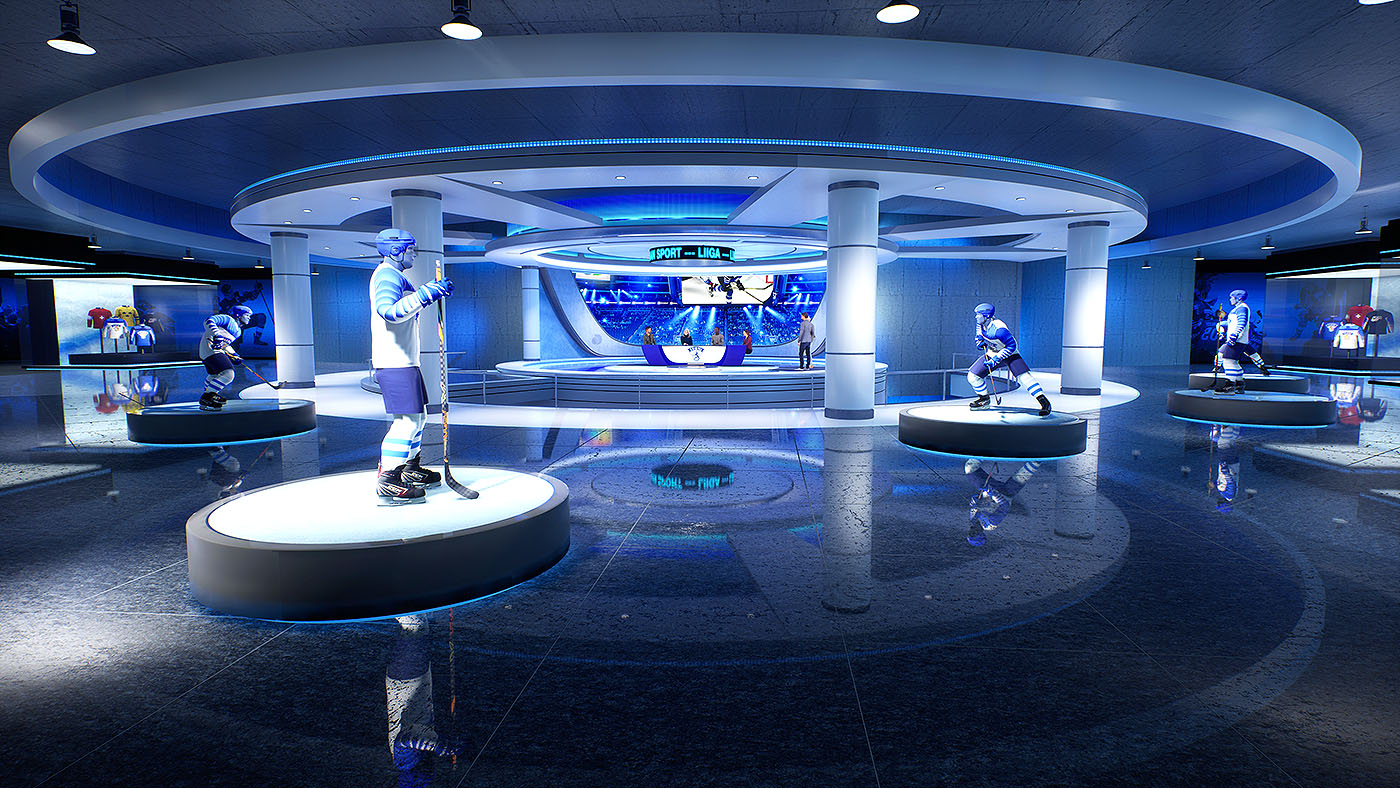
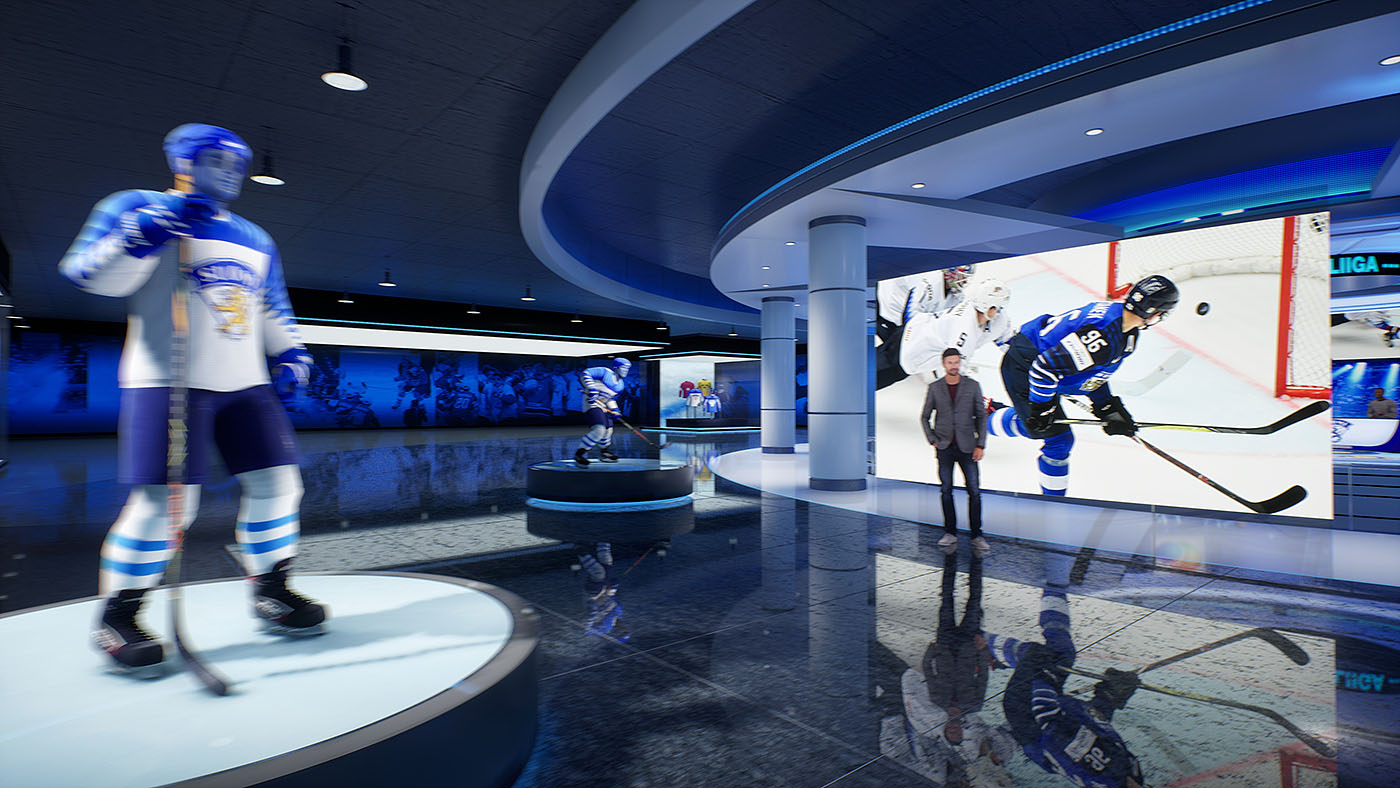
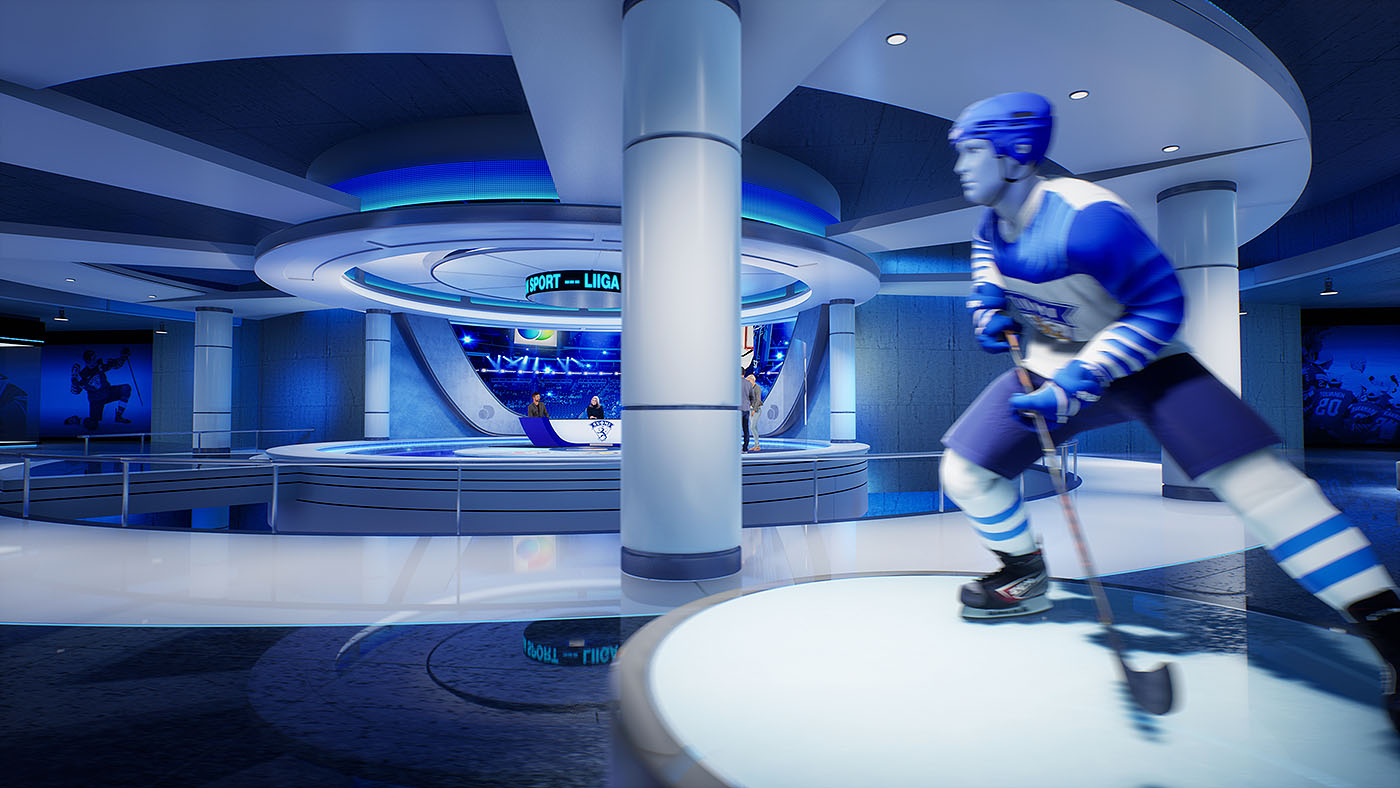
The answer was a sprawling, ring-shaped virtual environment - a circular studio space that wrapped presenters within a wide, open arena interior. The circular form was both architecturally distinctive and editorially practical: it gave directors a continuous environment to move through, with no hard edges or dead ends, and created a natural sense of enclosure that suited the intensity of ice hockey coverage.
Flanking the main presenting position, columns and full-scale hockey player mannequins were introduced at carefully considered intervals. These elements served a specific purpose beyond decoration - they created the foreground and mid-ground layers necessary to generate convincing parallax as the camera moved, reinforcing the illusion of a much larger physical space than the Helsinki studio actually contained.
Built Natively in Unreal Engine
One technically distinctive aspect of this project was that the virtual set was built natively within Unreal Engine - rather than the more common approach of building in a separate 3D application such as Cinema 4D and then transferring assets into the rendering environment. Building natively in Unreal allowed the design team to test camera positions, lenses, and lighting conditions in real time throughout the design process - making adjustments iteratively within the same environment that would ultimately be used on air. This was particularly valuable given the spatial constraints of the Helsinki studio, where finding workable camera positions required continuous refinement rather than a single fixed solution.
The Virtual Camera and the Intro Sequence
To expand the sense of scale still further, the design made use of the virtual camera facility built into Zero Density's Reality Engine. By creating a presenting position fronted by a wide open area and flanked by the columns and mannequins, parallax was introduced into the programme's opening sequence - giving the camera the appearance of moving through a considerably larger space than the physical studio contained. The result was an opening that felt cinematic and expansive, setting the visual tone for the coverage before a presenter had even appeared on screen.
Technical Delivery
The studio ran on Zero Density's Reality Engine with Unreal Engine 4.27, using four Reality Engines for rendering. Talent was captured across four cameras - two Panasonic PTZ cameras (AW-UE150) and two Panasonic box cameras (AK-UB300) - a configuration chosen to maximise flexibility within the constraints of the physical space.
The Result
A virtual studio that transformed a small Helsinki greenscreen room into a sprawling ice hockey arena — visually credible, editorially flexible, and technically innovative in its native Unreal build approach. It demonstrates that the constraints of a small physical studio need not limit the ambition of the virtual environment built within it — provided the design process is rigorous enough to find the solutions that make the space work.
The NewscastStudio feature on this project is available here.
Client
Discovery+/Eurosport
Design
Toby Kalitowski
Jim Mann, Lightwell
Realtime Engine
Unreal Engine 4.27
Studio Integration
Suora Broadcast
Powered by
Zero Density